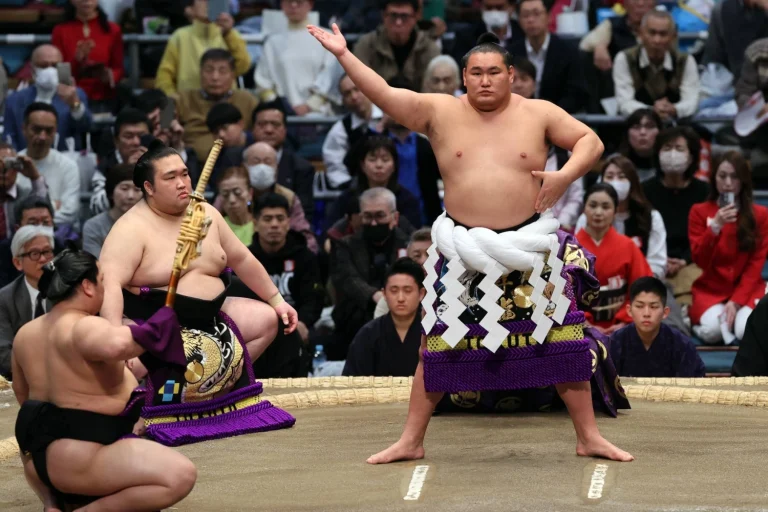
Sumo isn’t some flashy show. It’s a grind. If you’re wandering around the Aoto neighborhood in Tokyo looking for a shiny tourist trap, you’re lost. Oshima-beya is a working stable – a heya – where the air gets thick with a mix of expensive bintsuke hair oil and that raw, heavy scent of damp clay. It’s tucked away in Katsushika. It’s far from the neon lights of Shinjuku. This place has a real soul. It is one of those rare spots where you can actually feel the weight of history without someone trying to sell you a plastic keychain version of it.
An Introduction to Oshima-beya and Its Place in Sumo History
Oshima-beya isn’t just another name on the list of 40-something stables in Japan. It was a pioneer. Founded back in 1980 by the former Ozeki Asahikuni, it carved out this specific niche as a stable for technicians. They didn’t just want the biggest guys they could find. They wanted the smart ones.
But then 1992 happened. That was the year Asahikuni brought over six young men from Mongolia after a scouting trip to Ulaanbaatar. Nobody really grasped it then, but that was the start of the “Mongolian Wave” that would eventually dominate the whole sport for decades. Five of those kids actually tried to run away to the Mongolian embassy because the training was brutal and the culture shock was just too much. They were eventually convinced to stay. The rest is literally history. These six pioneers – including guys who became legends like Kyokutenho and Kyokushuzan – opened the floodgates for future Yokozuna like Hakuho.
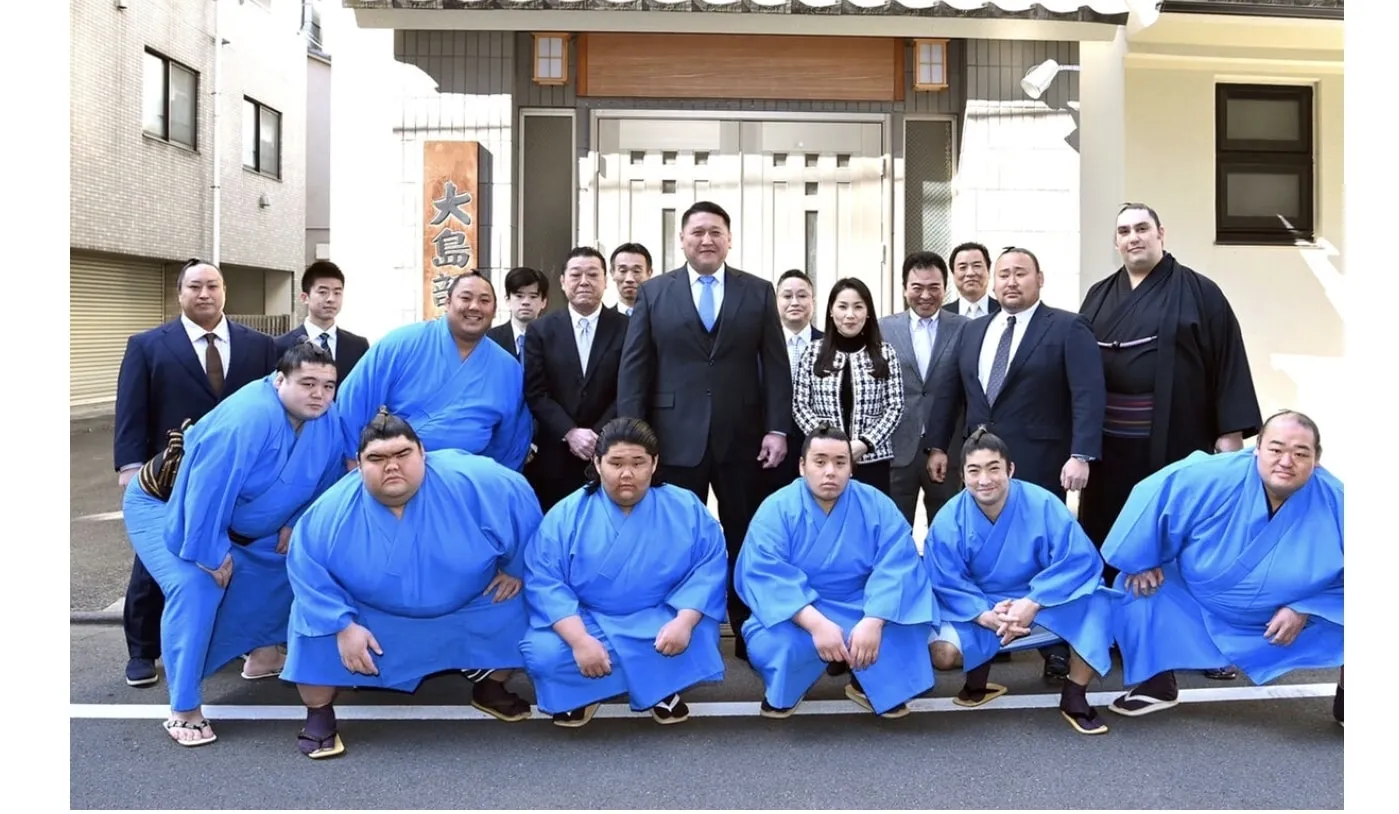
The Legacy of the Oshima Stable: From Asahikuni to Kyokutenho
The lineage here is wild. It’s a story about survival. The original Oshima stable actually closed its doors in 2012 when Asahikuni hit the mandatory retirement age of 65. The wrestlers all moved to Tomozuna-beya, which is an older stable with roots going back to the Meiji era. For a decade, the Oshima name was basically just a memory.
Then 2022 rolled around. Kyokutenho, who was the first Mongolian-born wrestler to ever lead a stable, decided to reclaim the Oshima name. He renamed Tomozuna back to Oshima-beya. It effectively merged two deep lineages under one roof. It was a full-circle moment. I think the legacy isn’t just about the trophies; it’s about that “Kyoku” (旭) character in their names. It means “rising sun” – a tribute to the founder Asahikuni.
Meet the Current Stablemaster: Oshima Oyakata’s Leadership and Philosophy
Oshima Oyakata (the man formerly known as Kyokutenho) is a legend. Period. He fought until he was 40. That is unheard of in a sport that usually breaks your knees by the time you’re 30. He retired as the all-time leader in top-division bouts with a staggering 1,470 matches. He won his first and only championship at age 37. That makes him the oldest first-time winner in the history of professional sumo.
His philosophy is pretty simple: perseverance. He’s not one of those screamers. He’s a “lead by example” type of guy. He survived that 1992 runaway attempt and stayed to become a Japanese citizen and a pillar of the community. In the stable, he expects that same mental toughness. You don’t quit because it hurts. You quit when you’re done. His leadership style is often called “warm but firm.” He focuses on the longevity of the wrestler instead of just grabbing short-term wins.
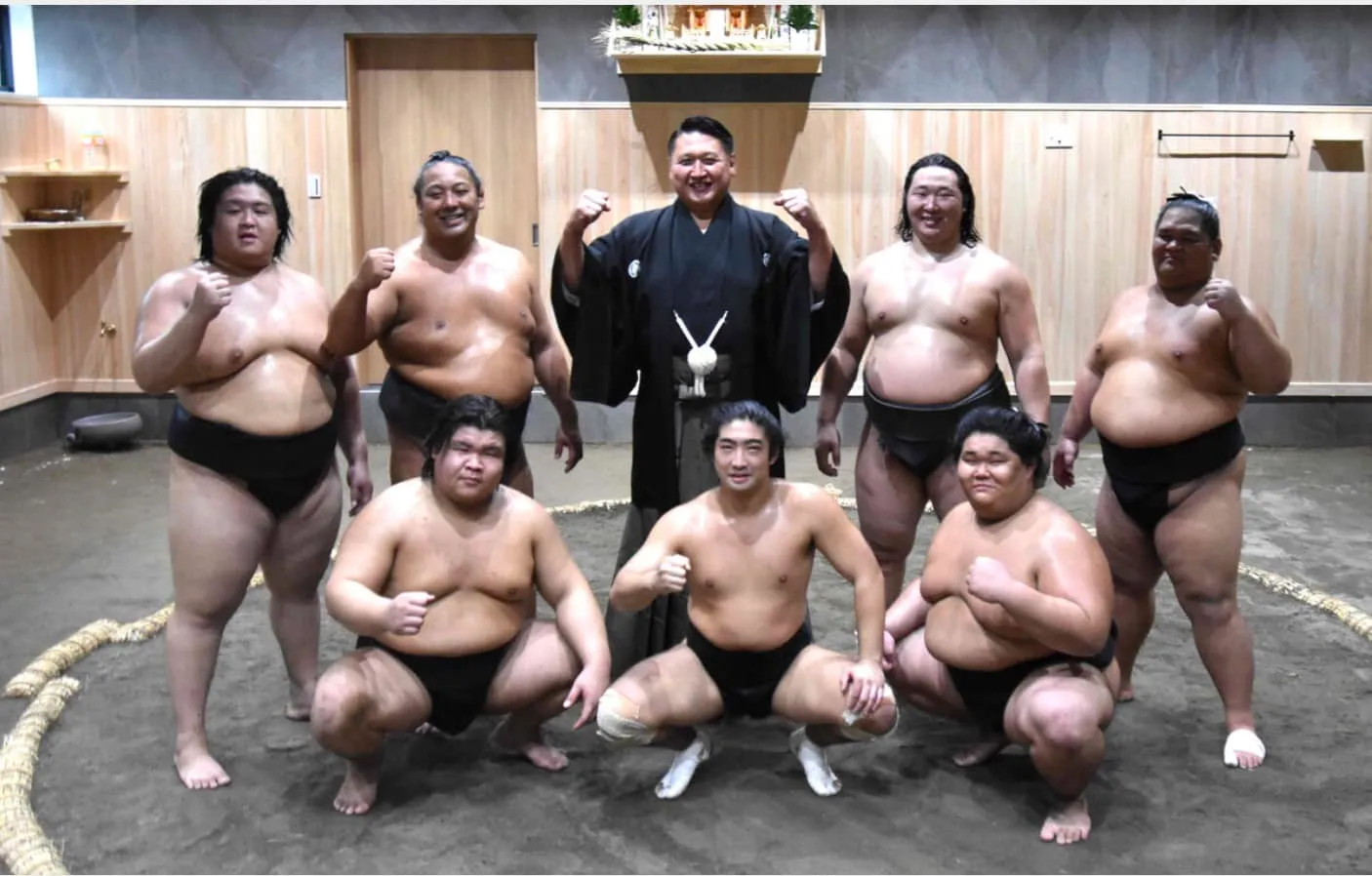
Notable Wrestlers Past and Present from the Oshima Lineage
You can’t talk about Oshima without mentioning the giants who walked these floors:
* Asahifuji: The 63rd Yokozuna. The gold standard for the stable.
* Kyokushuzan: The guy who basically taught the world that Mongolians could wrestle. He later became a politician in Mongolia.
* Kyokutenho: The current boss, obviously.
* Kaisei: The massive Brazilian-born rikishi who retired in 2022. He was a fan favorite with a smile as big as his 200kg frame. He’s now a coach in the stable.
Currently, keep an eye out for Kyokukaiyu. He’s the one to watch in the upper divisions. He carries that classic technical edge. He uses footwork and timing instead of just raw bulk.
Fueling the Giants: Chanko-nabe Culture at Oshima
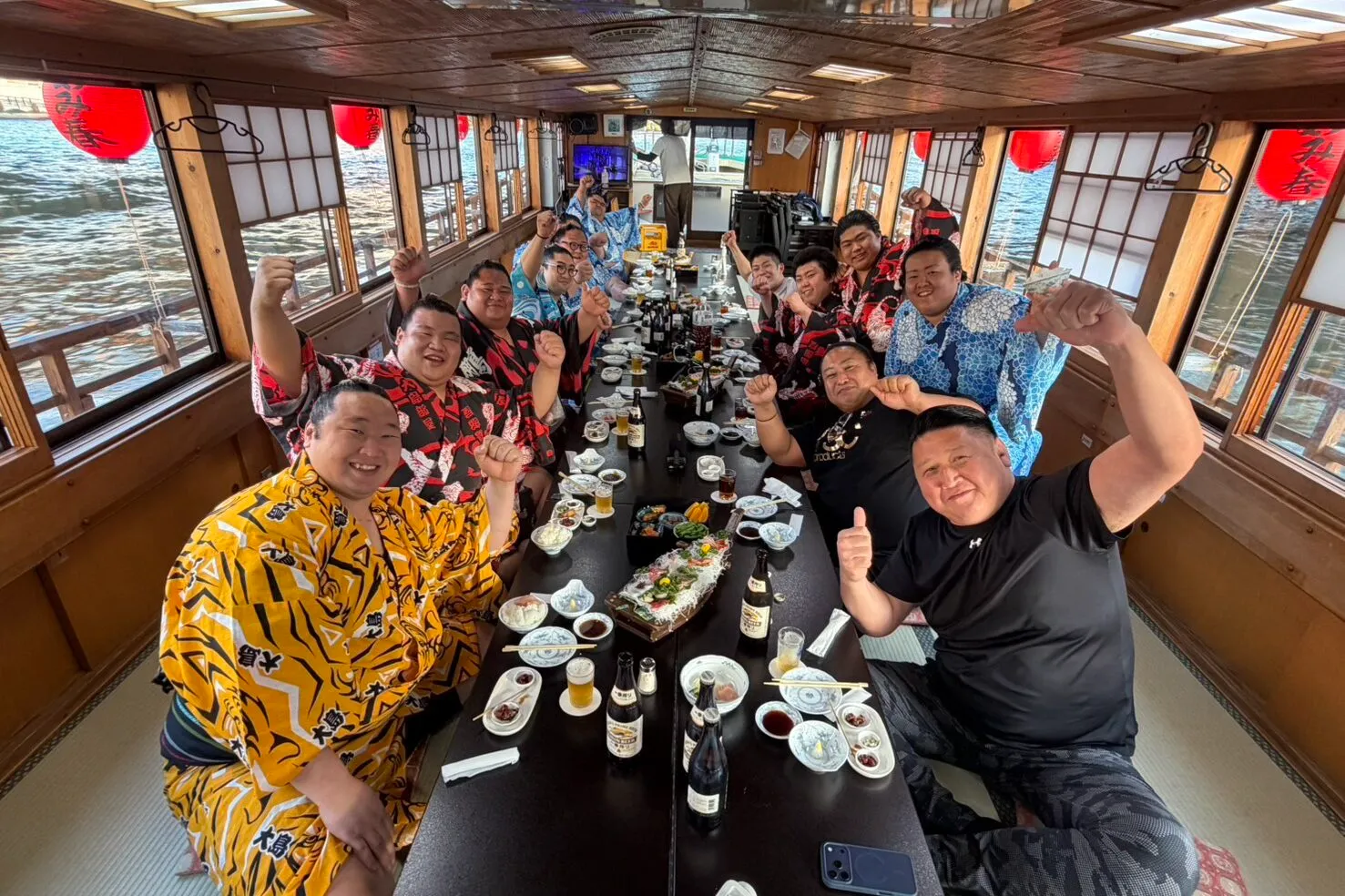
You can’t really understand a sumo stable without understanding the food. At Oshima-beya, the heart of the home is the kitchen. After morning practice ends, the chanko-ban – the junior wrestlers assigned to cooking duty – serve up Chanko-nabe. This is the legendary sumo stew. It’s a massive pot of dashi or chicken broth loaded with cabbage, leeks, tofu, and mountains of protein.
AI Planning your trip? Ask AI Tokyo Concierge
Get personalized help based on this guide, your travel dates, budget, and plans.
There’s some superstition in the pot: traditionally, sumo stables favor chicken over beef or pork. Why? Because a chicken stands on two legs. In sumo, if you touch the ground with anything other than the soles of your feet (like a four-legged animal), you lose. Eating “two-legged” protein is considered a good luck charm for staying upright in the ring. At Oshima, the meal follows a hierarchy. The Oyakata and the top-ranked wrestlers eat first. The juniors wait their turn. Eventually they clean the pots and do the dishes.
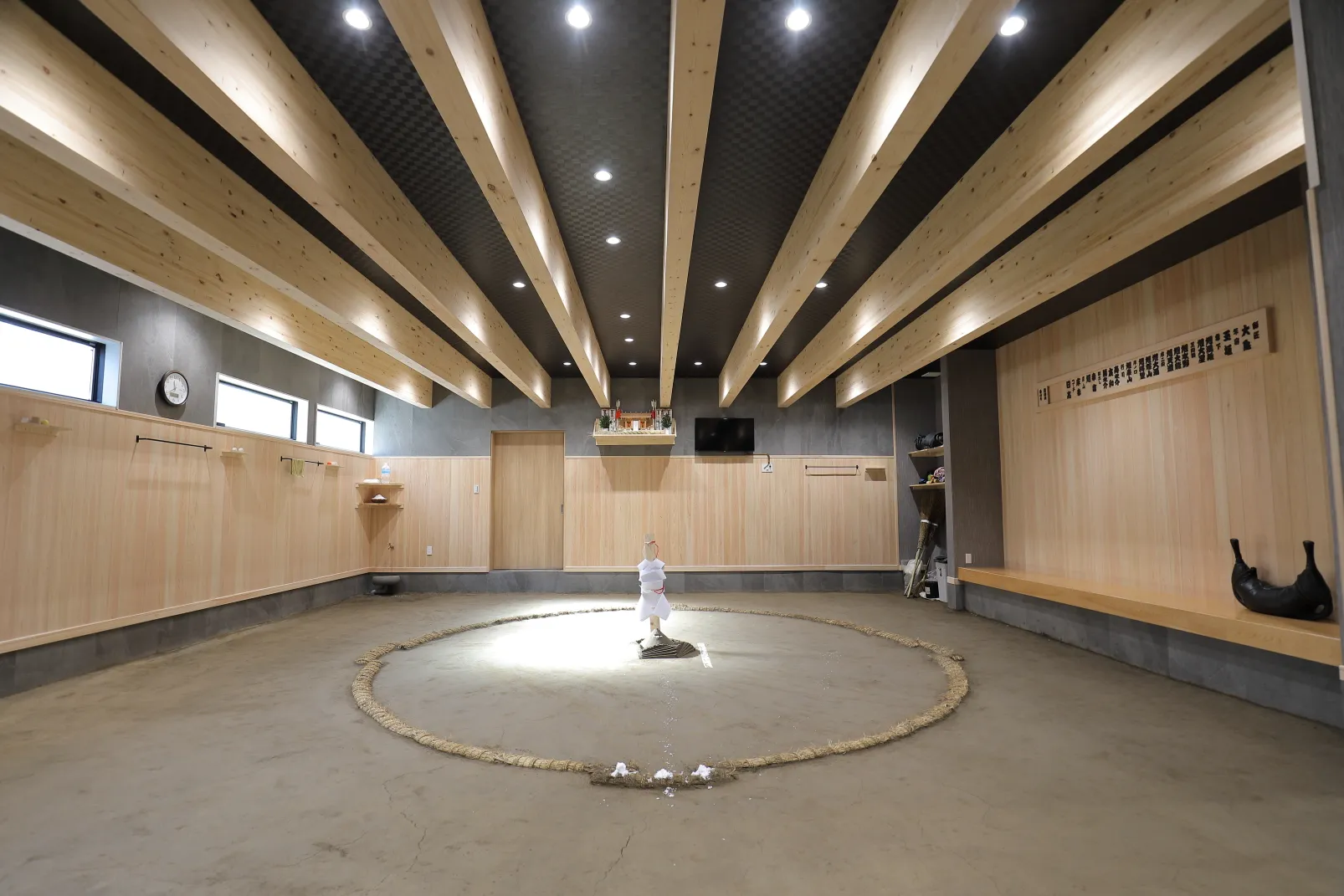
Architecture of the Aoto Stable: A New Era in Katsushika
In October 2024, Oshima-beya officially entered a new chapter. They moved into a custom-built, three-story facility in Aoto. This wasn’t just a simple relocation. It was part of a landmark “Sumo Partnership” with the Katsushika Ward government. The ward leased the land to the stable with the goal of using sumo to revitalize the local community and promote tradition.
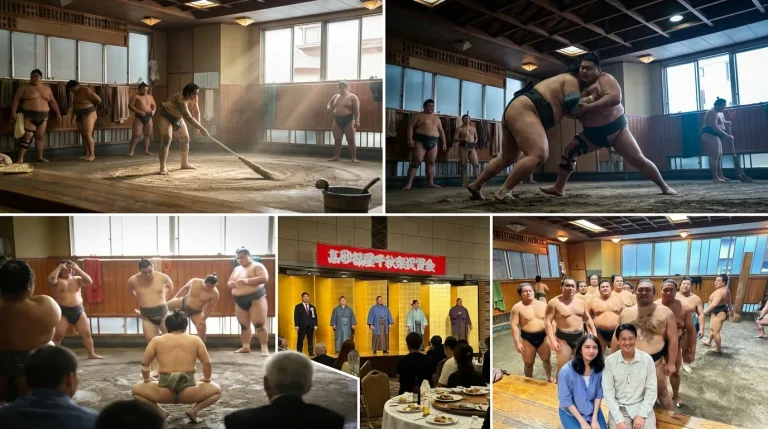
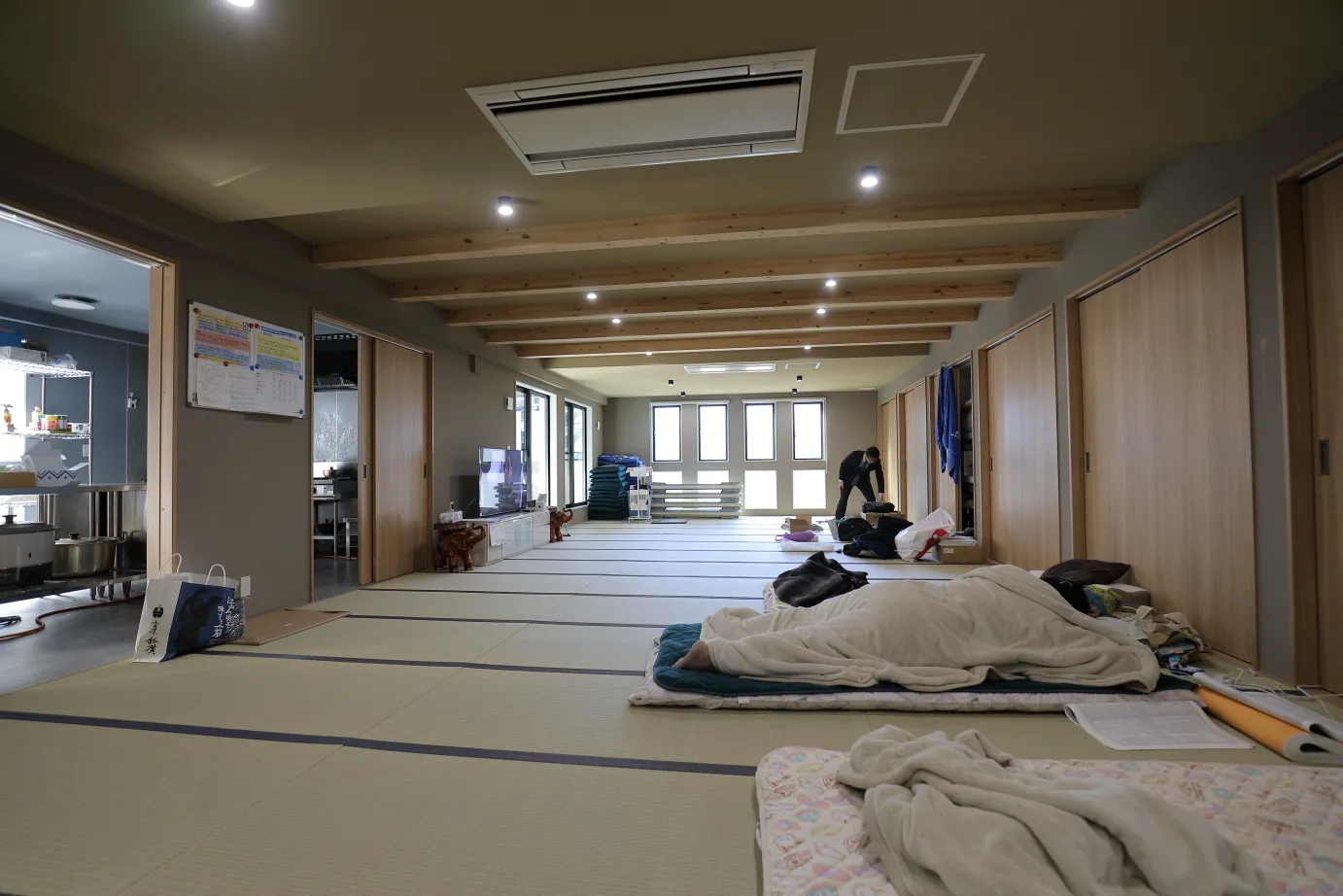
The new building is a blend of modern efficiency and ancient tradition. The ground floor houses the dohyo (practice ring), which is prepared with carefully sourced clay and salt. The upper floors serve as the communal living quarters for the rikishi. This facility is more than a gym. It’s a fortress of discipline that has brought a new sense of pride to the quiet streets of Aoto.
How to Experience a Sumo Morning Practice at Oshima-beya
Asageiko (morning practice) starts early. Like, “why am I even awake?” early. Usually around 7:30 or 8:00 AM.
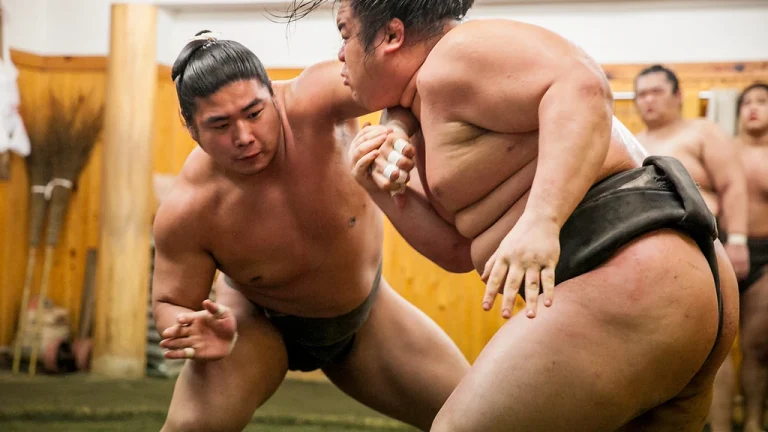
The room is silent except for the slapping of skin and the heavy breathing that sounds like a steam engine. There’s no music. No cheering. You sit on a floor cushion and watch guys the size of refrigerators collide. It’s violent but weirdly meditative.
The practice follows a strict ritual:
1. Shiko: Those rhythmic leg stomps that build lower body strength and drive away evil spirits.
2. Matawari: The brutal leg splits where wrestlers push their chests to the floor. Honestly, it looks painful.
3. Butsukari-geiko: This is the collision practice. A lower-ranked wrestler repeatedly slams into a senior wrestler, who acts as a human wall. It’s an exercise in pure exhaustion.
By 9:30 AM, the big guys enter the ring. That’s when the floor starts to vibrate.
Planning Your Visit: Location, Directions, and Best Times to Go
Don’t go to the old address in Sumida. They’re now firmly established at 7-27-4 Aoto, Katsushika-ku, Tokyo.
To get there, take the Keisei Line to Aoto Station. It’s about a 10-15 minute walk from there. It’s a residential area. Very quiet. Don’t be the person rolling a loud suitcase down the street at 7:45 AM.
Best time? Not during a tournament. If there’s a tournament happening in Tokyo (January, May, September), the wrestlers aren’t at the stable; they’re at the stadium. Go in the “off” months. April or August are usually good bets for catching a full house. Be aware that the stable often holds “De-geiko” – joint practices with other stables – so checking their schedule or social media is a smart move.
Vital Etiquette and Manners for Watching Sumo Practice (Asageiko)
This is where people mess up. A sumo stable is a home and a sacred space. It is not a theater.
* Shut up. I mean it. No whispering. Even a cough feels like a crime in that silence.
* Sit still. Don’t get up to stretch your legs. If your legs fall asleep, suffer in silence.
No feet pointing. Never point the soles of your feet toward the ring (dohyo*). It’s incredibly rude. Tuck them under you.
* Phones off. Not on silent – off. The clicking of a camera shutter can ruin a wrestler’s concentration during a dangerous move.
* No food. Don’t even think about bringing a coffee in there.
How to Secure a Reservation or Tour for Your Oshima-beya Visit
Here is the truth: it’s getting harder to visit. Oshima-beya technically says that for Tokyo practices, you need to be a member of their koenkai (fan club).
But there are backdoors. Sometimes, if you email them directly in polite Japanese, they might let an individual in if there’s space. More likely, you’ll need to book through a specialized tour operator like Magical Trip or Sumo Experience. These groups have the relationships. They pay the “donation” to the stable and handle the etiquette briefing. It’s worth the 10,000 or 15,000 yen just to make sure you aren’t turned away at the door.
Frequently Asked Questions About Visiting Oshima-beya
Can I take photos?
Usually only at the very end if the Oyakata gives the nod. During practice? Almost never. If you are allowed, keep the flash off.
What should I wear?
Modest clothes. No shorts, miniskirts, or flip-flops. Think “visiting a temple.” Remove your hat and sunglasses the moment you enter.
Is it free?
If you’re invited, it’s customary to bring a gift – like a case of beer or energy drinks – or a small cash donation in a special envelope (go-shugi). If you’re on a tour, the fee covers this.
Can I talk to the wrestlers?
After practice, maybe. If they aren’t exhausted. Don’t force it. They just worked out for four hours and likely have chores to do before their first meal.
Final Tips for an Unforgettable Professional Sumo Experience
Honestly, just be a ghost. The less you are noticed, the better your experience will be.
Bring a pair of warm socks because the floor is freezing in the winter. And maybe eat a light breakfast before you go because the smell of the sweat and the intensity of the room can be a bit much on an empty stomach. It’s a raw, beautiful look into a world that hasn’t changed much in hundreds of years. Just show up, sit down, and let the power of it wash over you. It’s something you won’t forget . . . I promise.