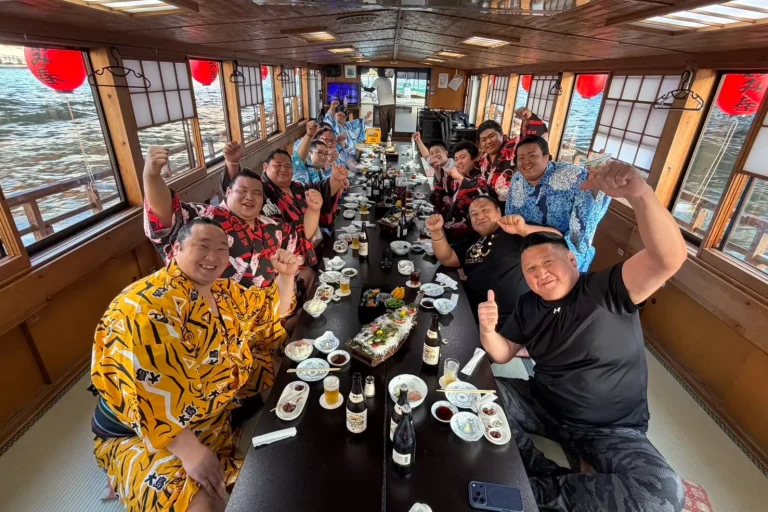
If you miss the Grand Tournament, you’re likely staring at the “sumo dinner shows” popping up around Tokyo. They are touristy traps. Loud ones. And honestly? They can be a hell of a lot of fun if you check your cynicism at the door.
1. Yokozuna Tonkatsu Dosukoi Tanaka (Sumida)
The heavyweight champion of the tourist circuit—no contest. A short hop from Ryogoku, this isn’t just eating pork cutlets; you’re watching retired wrestlers slam into each other in a regulation-sized dohyo right in the middle of the restaurant. The vibe is rowdy. In a good way. Ex-wrestlers are charismatic, speaking decent English, pulling kids into the ring to try and push them over. It’s pricey—expect to drop over 10,000 yen—but you’re paying for access. Not just the deep-fried pork.
2. Asakusa Sumo Club
A newer contender on the block. Feels a bit more “produced” than Tanaka. You get the chanko nabe (hot pot), you get the show, you get the photo op. It’s slick. Convenient if you’re already staying in Asakusa and great for families who need a guaranteed schedule. The food is… fine. Edible. You aren’t here for Michelin stars, though—you’re here to see big guys collide while you drink beer.
3. Hana no Mai (Ryogoku)
Used to be the go-to. Now it’s more of a themed izakaya than a dedicated show venue. There’s a ring in the center, sure, but live wrestling is sporadic. Great place to soak up the atmosphere on a budget—just don’t expect a full performance unless you’ve confirmed a specific event schedule beforehand.
Eat Like a Rikishi: The Real Chanko Nabe Experience
Dinner shows are the “Disneyland” version of sumo food; authentic Chanko Nabe restaurants in Ryogoku are the sweat-and-broth reality. Chanko refers to any meal eaten by sumo wrestlers, but it almost always means the massive, protein-rich hot pot used to bulk up.
Weird fact: traditional chanko during a tournament is almost always chicken. Why? Because a chicken stands on two legs. A cow or pig stands on four—and in sumo, touching the ground with your hands means you lose.
Want the authentic taste without laser lights and staged fights? Skip the tourist traps and go here:
- Kappo Yoshiba: The holy grail. Located inside a converted sumo stable (Miyagino-beya). The original clay ring is still in the center of the restaurant; you eat at tables surrounding it. They preserve the integrity of the soup stock (dashi) beautifully here.
- Chanko Tomoegata: A favorite among locals. They offer various broths, but their “Tachiyama” (soy sauce base) is legendary. Less gimmicky. More about high-quality ingredients.
- Chanko Kawasaki: Widely considered the oldest chanko restaurant in Tokyo. Small, traditional, serves a simpler, “sop-taki” style chicken stew that hasn’t changed in decades.
The Ultimate Sumo Experience: Grand Tournaments vs. Morning Practice Tours
Here is where people get confused. They think “sumo is sumo.” Wrong. The difference between a Grand Tournament (Basho) and morning practice (Keiko) is like the difference between a rock concert and a library study session.
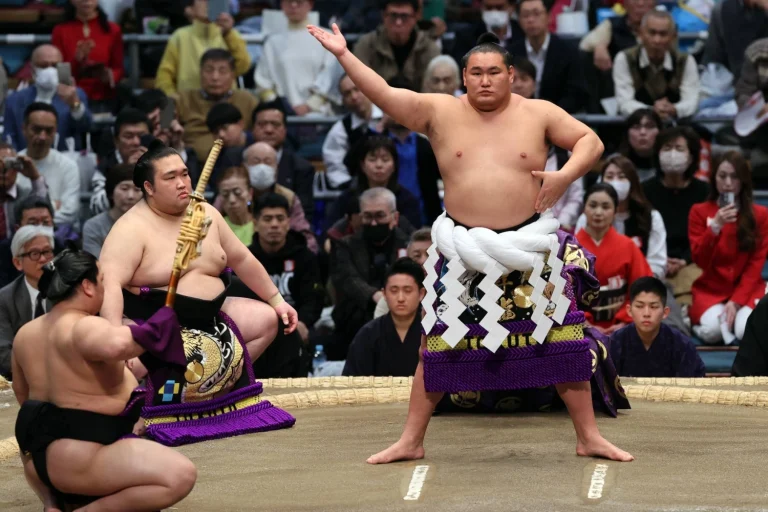
The Grand Tournament is electric. Chaos. You have 10,000 people screaming, throwing cushions (rarely, but it happens), eating yakitori. The pageantry is insane—salt throwing, foot stomping, colorful mawashi. It’s a festival. You go here to feel the pulse of Japan.
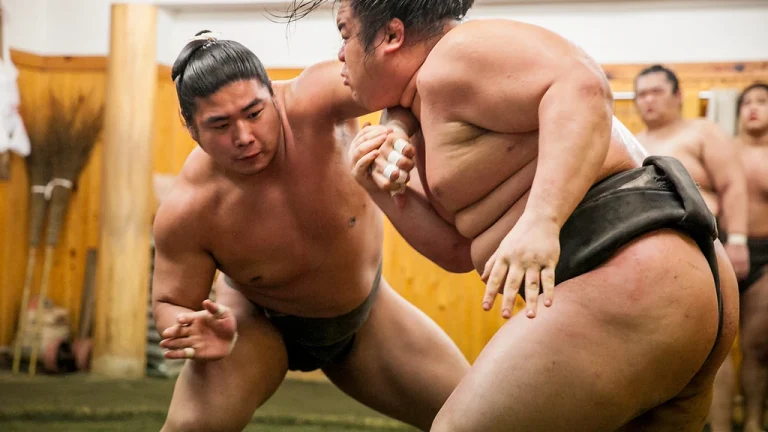
Morning Practice is silent. Deadly silent. You sit on the floor, legs cramping, watching massive men smash their bodies together with the sound of wet clay slapping flesh. No music. No announcer. Just heavy breathing and the stablemaster barking corrections. Intense and intimate. You can smell the sweat and the camellia oil in their hair. It’s not “entertainment”—it’s witnessing discipline.
AI Planning your trip? Ask AI Tokyo Concierge
Get personalized help based on this guide, your travel dates, budget, and plans.
What Exactly is Happening? Decoding the Rituals
Watch a tournament and 80% of the time is spent on ritual. Only 20% on fighting. It can be baffling if you don’t know the code. Here is what you are actually watching:
- The Salt Throw (Kiyome-no-shio): You’ll see wrestlers grab fistfuls of salt and toss it high into the ring. A Shinto purification ritual to cleanse the dohyo of evil spirits. Also serves as a disinfectant for cuts.
- The Leg Stomp (Shiko): When they lift legs high and slam them down, they aren’t just stretching. They are symbolically stomping the “evil” out of the ground beneath the ring. A display of strength and stability.
- The Power Water (Chikara-mizu): Before the bout, wrestlers accept a ladle of water from the previous winner. They rinse mouths but do not swallow—symbolically purifying bodies before entering the sacred space. Like you would at a shrine entrance.
The Impossible Mission: How to Actually Get Tickets
Getting tickets to a Grand Tournament in Tokyo is harder than getting Taylor Swift tickets. I am not exaggerating. Official sales open about a month before the tournament. They sell out in minutes.
1. The Official Route (The Hard Way)
The official site is sumo.or.jp (or “Ticket Oosumo”). If you refresh the page the second they go on sale, you might get lucky. Interface can be clunky for non-Japanese speakers, though. Japanese credit cards are sometimes preferred.
2. The “Buy Sumo Tickets” Service (The Smart Way)
For most travelers, I recommend using a third-party buying service like buysumotickets.com. Yes, you pay a markup. But these guys are professionals who physically go and buy the tickets or use automated systems to secure them. For a once-in-a-lifetime trip? The extra $30 is worth the peace of mind.
3. Convenience Stores
If you are already in Japan, try the kiosks at 7-Eleven or Lawson. But if the online allocation is gone, the kiosk allocation usually is too.
Honest Reviews: Are Tokyo Sumo Shows and Tourist Experiences Worth the Price?
I’m going to be real with you—a lot of “Sumo Experience” packages sold online are borderline traps.
You see listings for “Sumo Demonstration + Lunch” charging $150 USD per person. Is it worth it? If you are a die-hard wrestling fan who respects the sport… probably not. You might find the theatricality of the dinner shows cringe-inducing. The wrestling is staged—they aren’t going 100% because they’d get injured.
But—big but here—if you are with kids? or if you have zero knowledge of sumo and just want a fun night out? Absolutely worth it. Real Sumo Association events are long, rigid, require patience. Tourist shows are fast, funny, interactive. You get the photo. You get the laugh. You get the story. Just know what you’re buying. You’re buying a performance, not a sport.
Where is the Best Place to See Sumo Wrestling in Japan?
Ryogoku Kokugikan in Tokyo. End of discussion.
Japan is a big country though, and the Sumo Association tours. If you aren’t in Tokyo in January, May, or September, catch a Grand Tournament elsewhere:
- March: Osaka (Edion Arena)
- July: Nagoya (Dolphins Arena) – Warning: It is incredibly hot and humid.
- November: Fukuoka (Kokusai Center)
Ryogoku remains the spiritual home. The station itself is decorated with sumo portraits. Streets smell like chanko nabe broth. The stadium is designed specifically for sumo—even cheap seats in the rafters give a decent view of the dohyo roof suspended from the ceiling.
The Brutal Reality: A Day in the Life of a Wrestler
To truly appreciate what you see, understand the lifestyle. It is feudal.
Wrestlers wake up around 5:00 or 6:00 AM. They train on an empty stomach for hours—slows down metabolism to help gain weight later. Lower-ranked wrestlers (Jonokuchi) have to wake up earliest, clean the stables, cook food for the senior wrestlers (Sekitori).
They eat their first meal—massive Chanko Nabe—around noon. Then they nap immediately for several hours. Convert those calories into mass. They are not allowed to drive cars. Must wear traditional dress (Yukata or Kimono) whenever they leave the stable. A life of total surrender to tradition.
Top Picks for Authentic Sumo Stable Visits and Morning Practice in Ryogoku
Want the “Keiko” experience? You have two main paths: the Free Scramble or the Paid Tour.
Arashio-beya (The Free Option)
The most famous stable for tourists because they have a massive window facing the street. You can stand outside, watch practice for free.
- The Good: Free. No reservation needed.
- The Bad: Crowded. You might be staring at the back of a tall German tourist’s head instead of wrestlers. Can’t hear the sounds of impact as well through glass.
Paid Stable Tours (The Insider Option)
Several stables (like Musashigawa or sometimes Tokitsukaze) allow small groups inside via tour agencies.
- The Rules: Sit still. Do not extend legs toward the ring (soles of feet are disrespectful). No whispering. No eating.
- The Reality: Physically uncomfortable. Emotionally incredible. You are three feet away from a Yokozuna-level force. Watching the hierarchy—young wrestlers scrubbing backs of elders—gives insight into Japanese society you can’t get anywhere else.
Bringing the Dohyo Home: Best Souvenirs
If you visit Ryogoku Kokugikan, don’t leave without hitting the gift shop. Goldmine of weird and wonderful items you can’t find at Don Quijote.
- Tegata (Handprints): The ultimate souvenir. Shikishi boards with the red handprint and calligraphy signature of top wrestlers.
- Banzuke: Official ranking sheet for the tournament, written in a specialized, incredibly dense calligraphy style called sumo-ji. Looks like art.
- Lion-Do: Not in the stadium—just down the street. A clothing shop for “Big Men.” Even if you are average size, worth a visit just to see underwear that could double as a parachute.
Why the Sumo Experience is a Must-Do for Every Japan Itinerary
Because it’s the only sport that hasn’t sold its soul to modernity.
Baseball in Japan is fun, but it’s still baseball. Soccer is soccer. Sumo is ancient Shinto ritual disguised as grappling. The referee dresses like a priest from 600 years ago. Roof over the ring mimics a shrine. Salt is for purification.
When you watch a match, you aren’t just watching fat guys push each other. You are watching a living artifact. It’s weird. It’s confusing. Deeply beautiful. Forces you to slow down and appreciate the tension before the violence.
How to Choose the Right Sumo Activity for Your Budget and Schedule
Here is my breakdown . . . call it a cheat sheet.
If you are in Tokyo in Jan, May, or Sept:
- Budget: Buy “General Admission” tickets on the day of the tournament (if you line up at 6 AM). Cost: ~2,500 yen.
- Splurge: Pre-order Box Seats via a buying service (months in advance). Cost: ~15,000+ yen.
If you are in Tokyo outside tournament months:
- Authentic/Budget: Go to Arashio-beya early morning (7:30 AM). Cost: Free.
- Authentic/Splurge: Book a Morning Practice Tour. Cost: ~10,000 – 15,000 yen.
- Fun/Family: Yokozuna Tonkatsu Dosukoi Tanaka. Cost: ~11,000 yen (includes lunch).
- Foodie: Lunch at Kappo Yoshiba to see the ring without the wrestling. Cost: ~3,000 yen.
Don’t overthink it. Just get close to the ring. Whether it’s a plastic table at a dinner show or a tatami mat at the Kokugikan—seeing the size of these human mountains in person changes everything.