Is the Sumo Experience in Tokyo Actually Worth It?
Honestly? Yes. A thousand times yes. But—and this is a big “but”—it’s probably not what you expect.
If you’re looking for non-stop, high-octane violence like a UFC cage match or WWE drama, you’re going to be confused. Maybe even bored stiff. Sumo is slow. Glacial. It’s 90% ritual—salt tossing, foot stomping, heavy staring—followed by five seconds of violent, earth-shaking collision. And then it’s over.
I’ve seen tourists walk out after an hour because they didn’t “get it.” Don’t be that guy.

The value isn’t just in the fight. It’s the vibe. It’s the smell of bento boxes and stale beer mixing with the dust from the dohyo. It’s watching a 150kg giant demonstrate flexibility that would shame a yoga instructor. When the crowd collectively holds its breath right before the tachiai (the charge), the tension is heavy enough to crush a can. Is it worth it? Absolutely. But only if you’re willing to slow down and soak up the weird, ancient rhythm of it all.
Why Ryogoku Kokugikan is the Best Place to See Sumo Wrestling in Japan
You can catch sumo in Osaka, Nagoya, or Fukuoka, but Ryogoku Kokugikan in Tokyo is the mothership. The Vatican of wrestling.
Built in the 80s, it doesn’t look particularly ancient from the outside—it’s just a big, green-roofed box next to the Edo-Tokyo Museum (Note: The museum is currently closed for major renovations until 2026, so don’t plan your afternoon around it). But inside? Electric. The acoustics are designed to amplify the slap of flesh on flesh.
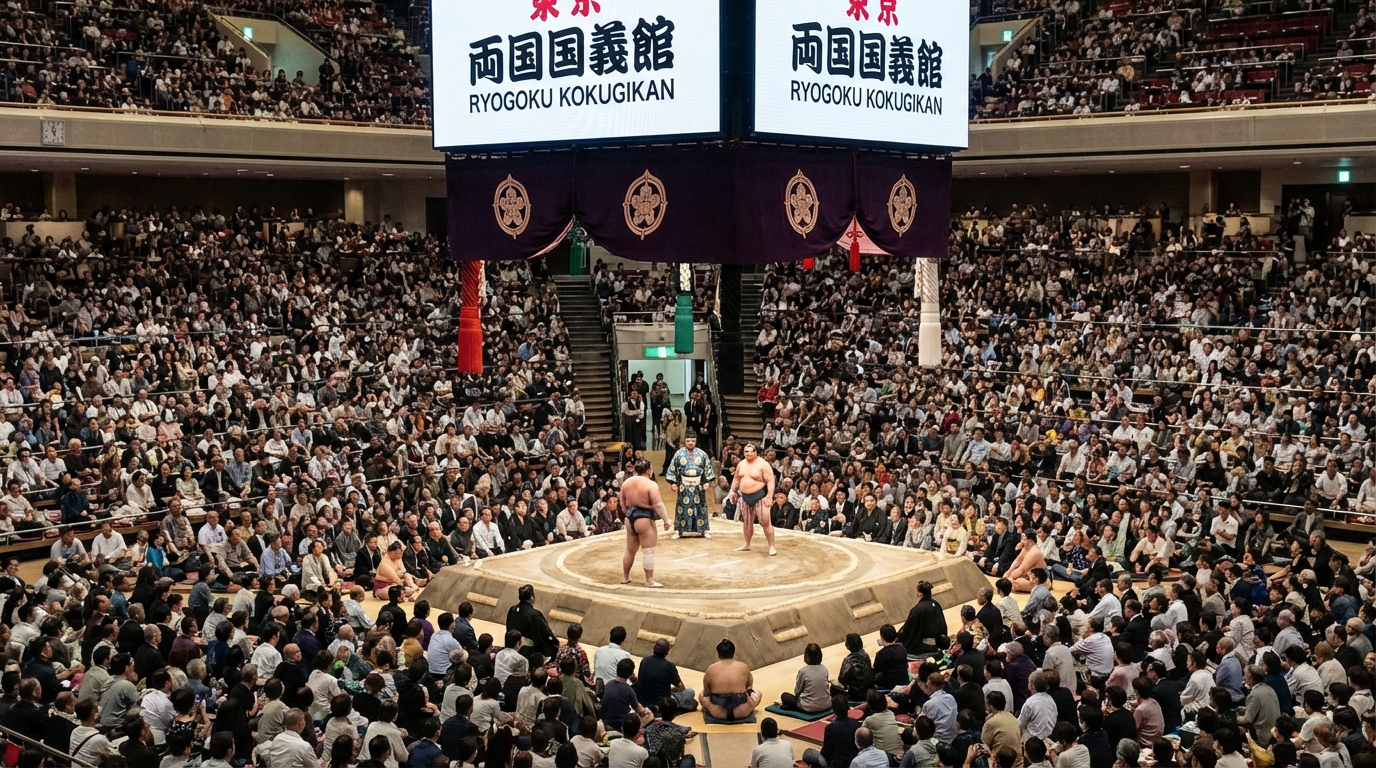
History bleeds through the walls here. Ryogoku has been the sumo district since the Edo period. Streets outside are lined with chanko nabe restaurants (hot pot for weight gain, delicious for everyone) and you’ll literally bump into wrestlers buying convenience store snacks in their yukatas. Surreal stuff.
Fun fact that usually blows people’s minds: The stadium has a massive yakitori factory in the basement. Seriously. They make tens of thousands of skewers a day down there. The chicken doesn’t touch the ground (like a sumo wrestler trying to win), so it’s considered good luck. It’s also cold and delicious. Buy it. Eat it.
2025 Tournament Schedule: The Best Time to See Sumo in Tokyo
Sumo happens six times a year, but only three of those are in Tokyo. Book a trip in March expecting to see sumo in Tokyo and you’re going to be watching it on TV while everyone else is partying in Osaka.
Here are the Tokyo dates you need for 2025. Mark them.
AI Planning your trip? Ask AI Tokyo Concierge
Get personalized help based on this guide, your travel dates, budget, and plans.
- January Tournament (Hatsu Basho)
- Dates: January 12 – January 26, 2025
- Vibe: Freezing outside, sweating inside. The first tournament of the year sets the tone. New Year’s energy is high, wrestlers are fresh.
- May Tournament (Natsu Basho)
- Dates: May 11 – May 25, 2025
- Vibe: Perfect weather. The pleasant spring air makes waiting in line for merchandise way more tolerable. Ryogoku feels alive.
- September Tournament (Aki Basho)
- Dates: September 14 – September 28, 2025
- Vibe: Tokyo is humid soup, but the sumo is fierce as wrestlers push for year-end rankings.
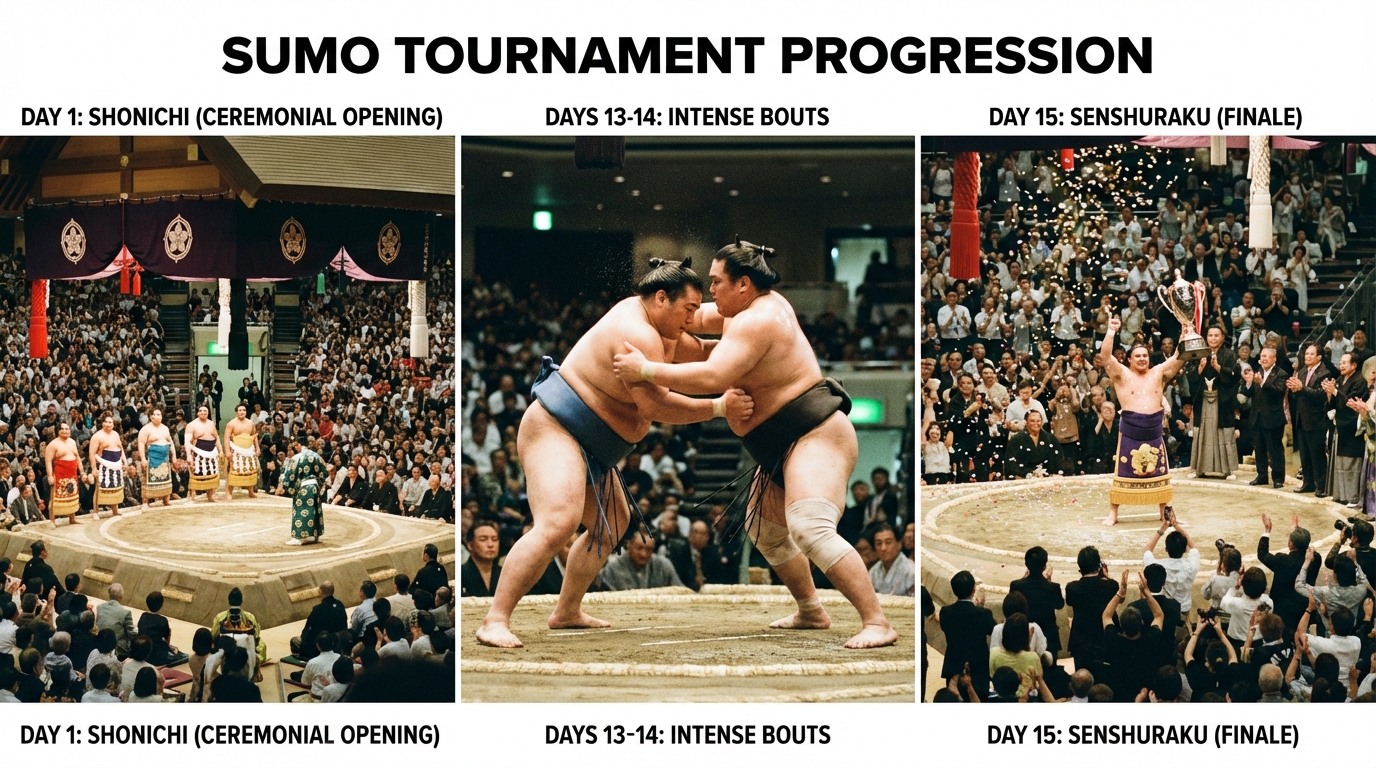
Crucial note: The tournament runs for 15 days. Day 1 (Shonichi) is ceremonial and exciting. Days 13, 14, and 15 (Senshuraku) are insane because titles are decided. Weekends are a zoo. Want a chill experience where you can actually stretch your legs? Go on a Tuesday in the middle of the tournament.
A Day at the Sumo: The Hourly Timeline
Rookie mistake: showing up at 8:00 AM expecting a packed house, or showing up at 5:00 PM and missing the pageantry. Here is how the day actually flows:
- 8:30 AM – 2:00 PM: The Lower Divisions (Jonokuchi to Makushita). The arena is 90% empty. Wrestlers here are young, hungry, unranked. The referee is young too. It’s quiet—you can hear the wrestlers breathing. Great time to move around and snap photos from different angles (ushers usually let you sneak into better seats during this time).
- 2:15 PM: Juryo Ring Entering Ceremony. The second-highest division enters. They wear colorful ceremonial aprons (kesho-mawashi). The crowd starts to fill in.
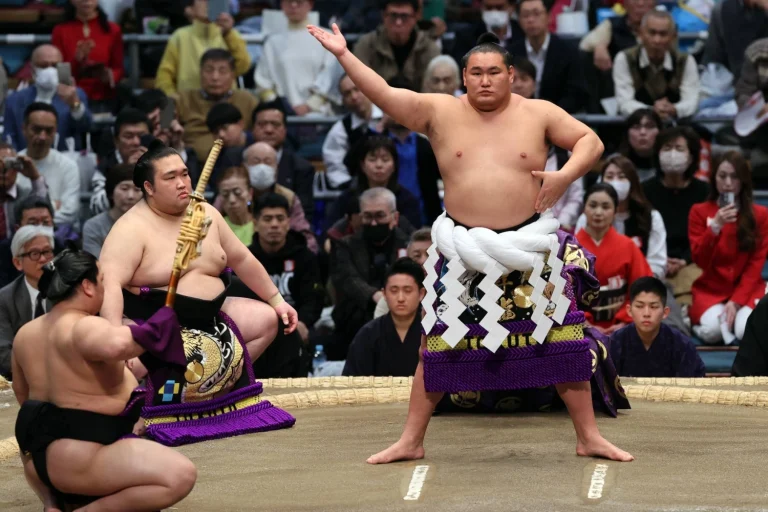
- 3:50 PM: Makuuchi Ring Entering Ceremony. The top division stars enter. This is the photo op. They circle the ring, clap, and lift their aprons.
- 4:00 PM: Yokozuna Ring Entering Ceremony. If a Grand Champion (Yokozuna) is active, this is the main event. It is spiritual and intense.
- 4:10 PM – 6:00 PM: Top Division Bouts. The big guys. Lights brighten, TV cameras roll, crowd goes wild.
- 6:00 PM: Bow Twirling Ceremony. A low-ranked wrestler twirls a bow at dizzying speed to close the day.

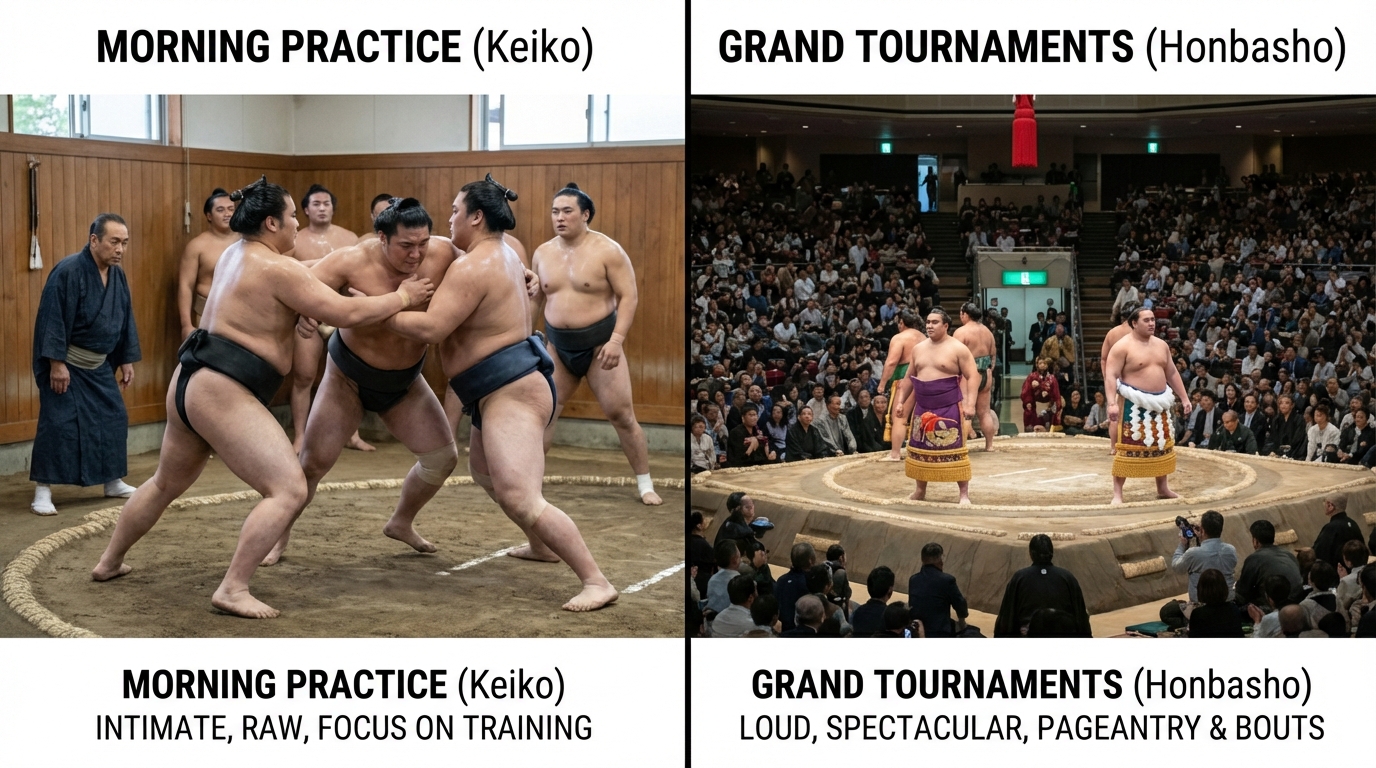
Morning Practice vs. Grand Tournaments: Which Sumo Experience is Right for You?
This is the dilemma.
The Grand Tournament (Honbasho) is a spectacle. It’s loud. There are lights, referees in exquisite silk outfits, and thousands of drunk salarymen yelling at their favorite wrestler. It’s a festival. You go for the energy.
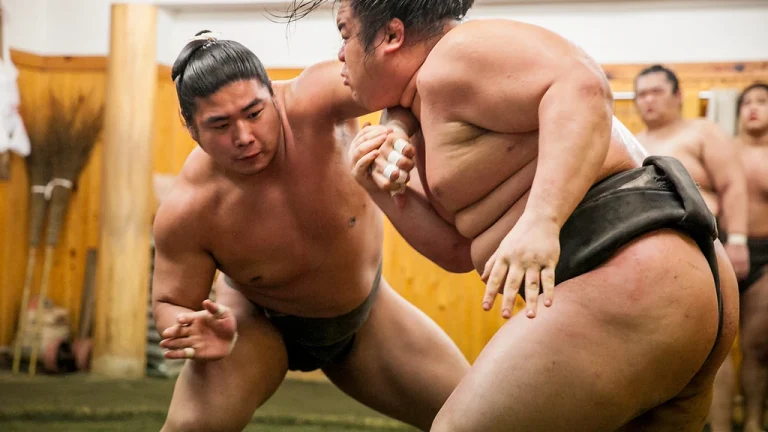
Morning Practice (Keiko) is the opposite. It is silent. Brutally silent.
You visit a stable (beya) early in the morning, often around 7:00 or 8:00 AM. You watch men smash their bodies against each other repeatedly until they are covered in sand and sweat. You hear their heavy breathing. You hear the slap of skin. It feels intimate, almost voyeuristic.
- Go to the Tournament if: You want the full cultural package, beer, food, pageantry.
- Go to Morning Practice if: You are a photography nerd, hate crowds, or want to see raw athleticism up close.
Warning: Many stables have closed their doors to tourists post-2020 because people couldn’t follow simple rules (like being quiet). The Arashio stable used to be famous for its “window” where you could watch from the street, and that’s still a solid, low-stress option. For 2025, unless you have connections, booking a guided morning practice tour is often the only way to get inside a stable without being turned away at the door.
Wrestlers to Watch in 2025
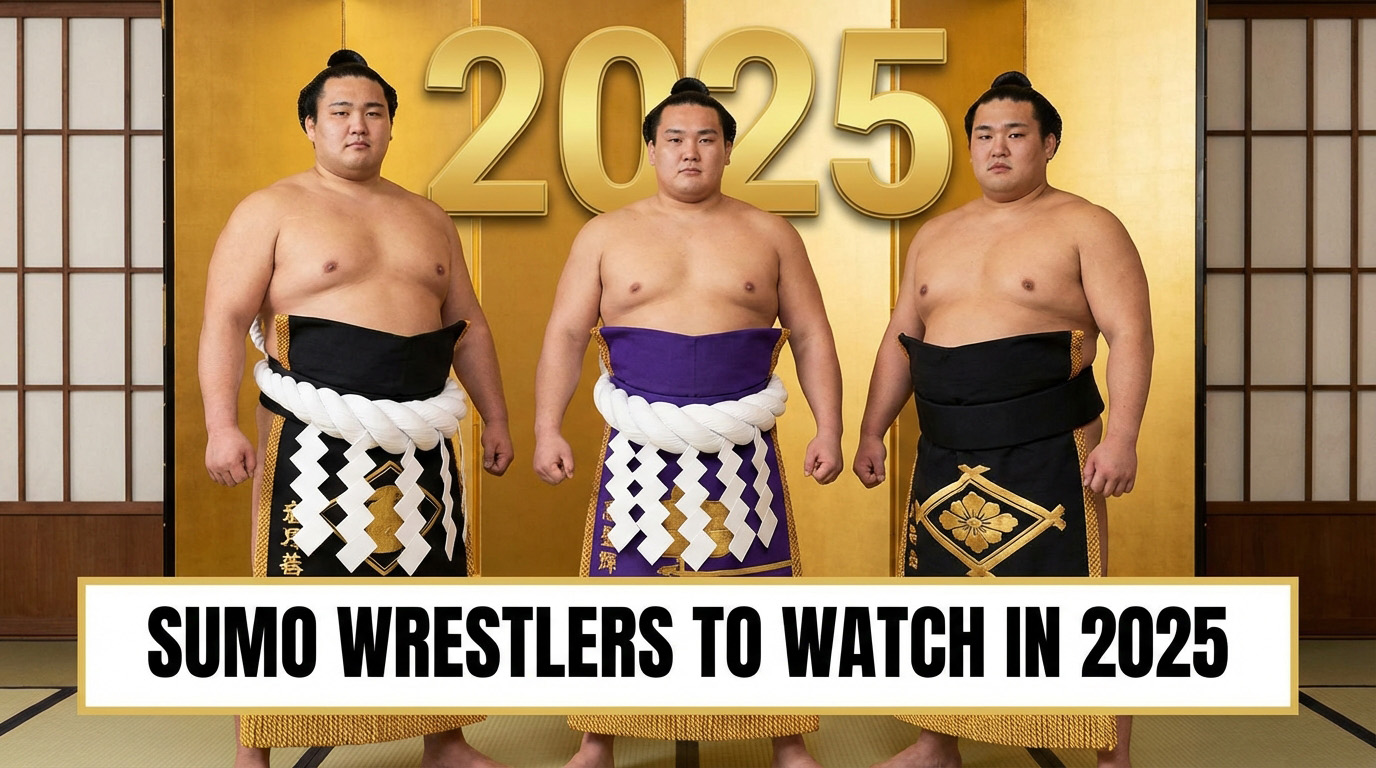
Sumo is driven by personalities. Knowing a few names turns “two fat guys pushing” into a narrative drama.
- Terunofuji (The Ogre): The sole Yokozuna (Grand Champion) as we enter 2025. He has knees of glass and often misses tournaments due to injury, but when he is healthy? He is a terrifying, immovable wall. Watching him is watching a living legend fighting against his own body.
- Onosato (The Young Monster): The new sensation. Skyrocketed through the ranks faster than almost anyone in history. He is huge, fast, represents the next generation. If he is fighting, don’t blink.
- Kotozakura (The Legacy): Recently promoted to Ozeki (the second-highest rank), he is the grandson of a former Yokozuna. Fights with a classic, sturdy style. Reliable, strong, desperate to reach the top rank.
- Hoshoryu (The Technician): Nephew of the legendary (and controversial) Yokozuna Asashoryu. He isn’t the biggest, but he is arguably the most skilled. He has a mean stare and throws people using trips and leverage that defy physics.
Decoding the Rituals: What Are They Doing?
You will see things that make no sense. Here is your cheat sheet:
- The Salt Throw: Before a match, wrestlers throw handfuls of salt into the ring. This is Shinto purification to cleanse the ring of evil spirits (and also acts as a disinfectant for cuts).
- Shiko (The Leg Stomp): When they lift their leg high and stomp it down, they are theoretically crushing evil spirits beneath their feet. Shows off balance and lower body strength too.
- The Gyoji (Referee): The man in the silk kimono shouting “Hakkeyoi!” carries a dagger in his belt. Why? Tradition dictates that if he makes a bad call and reverses the decision of a match, he must commit seppuku (ritual suicide). Obviously, they don’t do that anymore, but he will submit a resignation letter if he messes up. Stakes are high for everyone.
What to Wear: Demystifying the Dress Code for Sumo in Tokyo
Let’s keep this simple: There isn’t one.
I’ve seen spectators in three-piece suits sitting next to guys in cargo shorts and anime t-shirts. The wrestlers? They have a strict dress code. They have to wear traditional wax-polished hair and kimono/yukata in public. You? You just need to be covered.
A couple of tips though:
- Shoes off. If you are in the Box Seats (Masu-seki), you will be shoeless for 4+ hours. Wear clean socks. Please. For the love of everything holy, do not be the person with holey socks.
- Pants matter. In the box seats, you are sitting on a thin cushion on the floor. Cross-legged. Tight skinny jeans are a death sentence for your circulation. Wear something loose.
- Layers. The arena can fluctuate between chilly and stuffy depending on the crowd density and the season.
Don’t wear a giant hat. The stadium seating is steep; if you wear a sombrero, the person behind you will hate you with the fire of a thousand suns.
Feast Like a Giant: What to Eat (Inside and Out)
Sumo and food are inseparable. Here is how to eat your way through Ryogoku.
Inside the Arena:
- The Yakitori: As mentioned, the basement factory chicken is legendary. It’s sold in boxes of 5 or 10.
- Sumo Soft Serve: There is usually a special soft-serve ice cream stand. It’s nothing fancy, but eating ice cream while watching a violent collision is a unique joy.
- Bento Boxes: The “Makunouchi” bento is named after the top division of sumo. They are packed with rice, fish, pickles, and mystery meats. Sell out by 2 PM, so buy early.

Outside the Arena (Chanko Nabe):
After the match, you must eat Chanko Nabe—the protein-rich stew wrestlers eat to gain weight.
- Kappo Yoshiba: This is the coolest restaurant in the area. Built inside an old sumo stable and still has the dohyo (ring) in the middle of the dining room. They have live folk songs (Sumo Jinku) some nights. Book weeks in advance.
- Chanko Tomoegata: A Ryogoku staple. A bit more polished and upscale. Great for a proper sit-down dinner.
- Chanko Kirishima: Owned by a former Ozeki. It’s right near the station, accessible, and the broth is fantastic.
How to Buy Tickets and Secure the Best Seats for a Tokyo Basho
Buying sumo tickets used to be a dark art. It’s gotten better, but it’s still a stress test.
When to buy:
Tickets go on sale roughly one month before the tournament starts.
- Jan Tournament -> Sales start early December.
- May Tournament -> Sales start early April.
- Sept Tournament -> Sales start early August.
Where to buy:
- The Official Site (Ticket Oosumo): It has an English version. It works, mostly. It will crash when sales open. Keep refreshing.
- Convenience Stores (7-Eleven/Lawson): If you are already in Japan, you can use the kiosks. Good luck reading the Japanese interface if you aren’t fluent, though.
- Third-Party Services: Sites like buysumotickets.com or Klook are lifesavers. You pay a small premium, but they handle the purchase for you. I use these when I don’t want to wake up at 3 AM to fight a server error.
Seating Strategy:
- Ringside (Tamari): You sit on a cushion right next to the ring. You might get landed on by a falling wrestler. No eating. No drinking. No phones. Expensive and hard to get.
- Box Seats (Masu-seki): The classic experience. A small square on the floor for 4 people. Warning: “4 people” means 4 small Japanese people or 2 normal-sized Westerners. If you are a group of 4 big guys, buy two boxes. I’m serious. You will be miserable otherwise.
- Arena Seats (Chair): Second floor. Normal stadium chairs. Cheap. Great view of the whole arena. Honestly? These are the best value. You can wear shoes, drink beer, and see everything.
Essential Etiquette and Rules Every Sumo Spectator Should Know
Sumo is sacred. But it’s also a sport. It occupies this weird middle ground.
1. The Zabuton Throw
You might have seen videos of people throwing their cushions (zabuton) into the ring when a lower-ranked wrestler upsets a Grand Champion (Yokozuna).
- The Rule: Strictly prohibited.
- The Reality: People still do it sometimes.
- My Advice: Don’t do it. You can get kicked out, and hitting a 160kg man in the eye with a cushion is a bad survival strategy.
2. Cheering
Yell your head off. “Oshi-mashou!” (Push!) or just the wrestler’s name. But—and this is key—be dead silent during the tachi-ai (the pre-charge stare down). The wrestlers are concentrating. If you scream “KICK HIS ASS” during the silence, 10,000 people will turn and glare at you.
3. Eating and Drinking
In the box seats and chair seats, eat whatever you want. Bento boxes, yakitori, beer, sake, whisky. It’s a picnic. In the ringside seats? Zero food. Zero water. You are there to be a human guardrail, not to have lunch.
4. Don’t turn your back
Technically, it’s rude to turn your back on the ring while a bout is in progress. But since bouts last 10 seconds, this is rarely an issue. Just pay attention.
Sumo is weird, wonderful, and deeply human. It’s not just fat guys pushing. It’s a religious ceremony where someone gets thrown off a cliff of clay. Go. Watch. Eat the chicken. You won’t regret it.