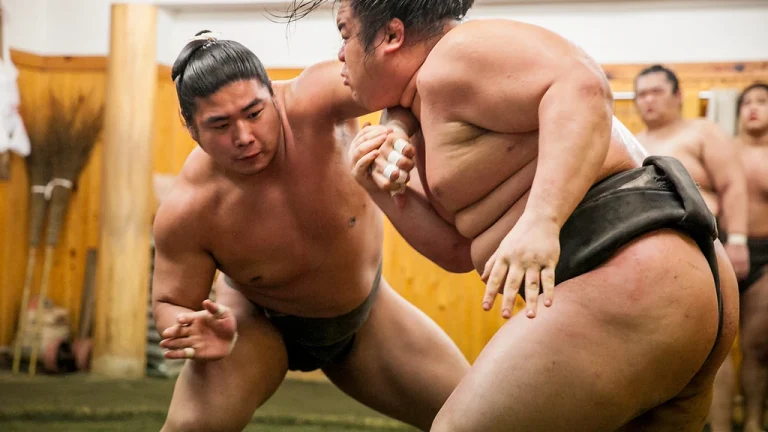
Six hundred pounds of human flesh colliding at full speed sounds like a car crash but I swear it’s pure poetry. If you’ve never sat close enough to hear the sickening wet slap of two rikishi smashing together . . . well. You haven’t really experienced Tokyo.
Why Sumo Entertainment is a Must-Do Tokyo Experience
Honestly people flock here expecting to just casually stroll into the Kokugikan arena to catch a match. They don’t realize official tournaments only happen three times a year in January, May, and September. Good luck getting tickets to those without selling a kidney on the black market. Scalper bloodbath.
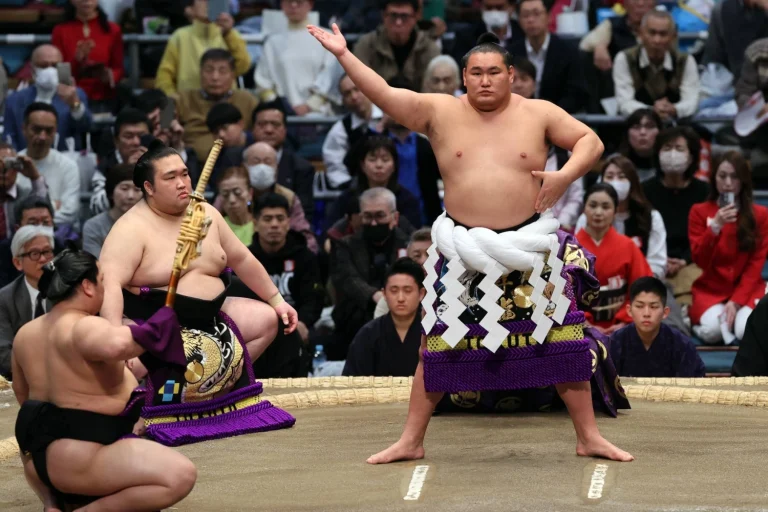
They also totally miss the point that sumo isn’t just huge dudes shoving each other. Ancient Shinto ritual. The violent stomping you see is literally designed to crush evil spirits into the dirt and they toss handfuls of salt to purify the space.
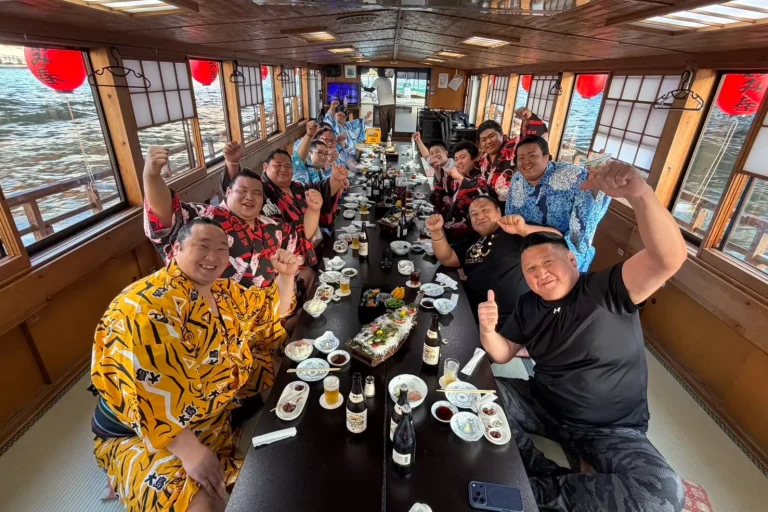
This is exactly why sumo dinner shows exploded across the city. You get the raw power. The stomping. The ceremonial salt-throwing – all without freezing outside a ticket booth at 4 AM. Plus they feed you. Real tournaments won’t let you jump in the ring in a padded suit to get publicly humiliated by a retired giant. These shows will. I think that sheer ridiculous thrill justifies the price tag alone.
Where Can I Find Sumo Dinner Shows in Tokyo?
You’re basically looking at three neighborhoods now: Ryogoku, Asakusa, and the bougie newcomer Ginza.
Ryogoku is the undisputed motherland. Step off the train and you literally smell bintsuke – the sweet pomade they use in their hair. It hangs in the air like vanilla and sweat. This is where the actual stables are hidden away down narrow alleys. If you’re heading to Ryogoku your timing in 2026 is flawless. The massive Edo-Tokyo Museum finally reopened on March 31, 2026 after a brutal four-year renovation. Spend the afternoon walking through life-sized recreations of Edo-period streets and then roll right into a dinner show.
Then there’s Asakusa. Tourist central. Loud, flashy, packed with rickshaws. Makes sense the newer entertainment venues set up shop here catching the massive crowds pouring out of Senso-ji Temple.
Ginza has stepped into the ring too. The high-end shopping district caters to travelers who want their sumo served with premium sake and fine dining.
Top Locations for the Best Tokyo Sumo Entertainment with a Meal
I’ll save you from drowning in fake TripAdvisor reviews. The scene morphed a lot heading into 2026 and a bunch of generic copycat places opened up serving lukewarm soup and sad performances. Skip them.
You only need to know about a handful of heavyweights.
AI Planning your trip? Ask AI Tokyo Concierge
Get personalized help based on this guide, your travel dates, budget, and plans.
- Yokozuna Tonkatsu Dosukoi Tanaka
- Asakusa Sumo Club (and its snobby sister, the Annex)
- Sumoland Tokyo Ryogoku
- The Sumo Live Restaurant Hirakuza Ginza (The new luxury titan)
- Hananomai Edo Tokyo (The budget-friendly izakaya option)
These are the titans. They have the budget. They have actual clay rings.

Yokozuna Tonkatsu Dosukoi Tanaka: Dining with Retired Pros
Yasuhiro Tanaka used to be a Juryo division wrestler before deciding deep-frying pork was a safer career path. His place in Sumida Ward is legendary. It’s a pork sanctuary wrapped around an authentic dohyo.
Most sumo spots push traditional stew on you. Tanaka says screw that and serves giant slabs of crispy tonkatsu.
Their main show is actually a lunch gig. Mondays, Wednesdays, and Fridays at 12:45 PM. You demolish your pork cutlet and then watch former pros demonstrate the psychological warfare of shikiri – the staring match before the bout. Then they pull people from the audience. You strap on a fake mawashi loincloth. You try to push a man who feels like a brick wall bolted to the floor. Humiliating. Hilarious.
They do a 5:00 PM afternoon slot now because demand got stupidly high. Maybe just come for dinner when there’s no live show but they play old matches on a massive screen. Cheaper.
Asakusa Sumo Club and Sumoland: Immersive Sumo Experiences
Want absolute theater you go to Asakusa Sumo Club. They opened in the Rokku Broadway arcade and spared no expense. The ring is made from Arakida clay. Same exact dirt used at the national stadium.
They hit you with everything. Geisha dance opens the show. A bilingual Aussie MC screaming into the mic while retired wrestlers throw salt and clash. The crowd loses its mind cheering for the East or West side. They run four shows a day starting at noon and ending at 10:30 PM. Got cash to burn they opened the Asakusa Sumo Club Annex in 2025. Billed as premium. You sit on plush sofas eating A5 Wagyu sukiyaki instead of standard hot pot. Fancy.
Sumoland back over in Ryogoku. Supervised by the 63rd Yokozuna. This place leans heavily into an interactive carnival vibe. Besides the wrestling and hot pot you actually get to smash rice into mochi with massive wooden mallets alongside the rikishi. Kids go absolutely feral for the mochi pounding.

The New 2026 Luxury Option: The Sumo Live Restaurant Hirakuza Ginza
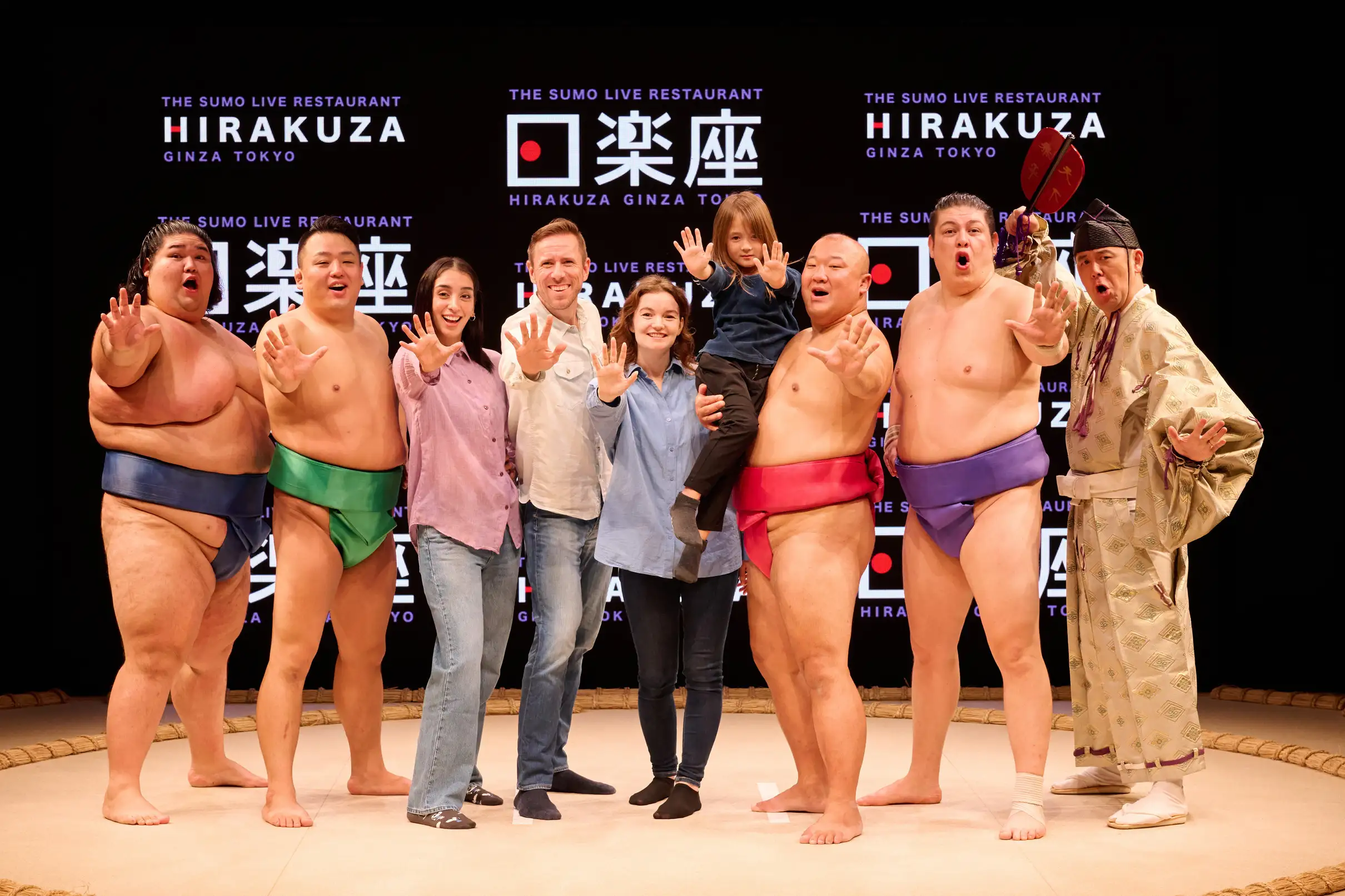
Ginza just entered the chat. Opening massive doors in January 2026 The Sumo Live Restaurant Hirakuza realized people will pay top dollar for high-end dining mixed with combat. Took the wildly successful formula from their Osaka branch and brought it to Tokyo’s glitziest district.
Instead of rustic hot pot you eat a delicate multi-course Kaiseki dinner. English-language show focuses on the Heart, Technique, and Body of the sport before letting the retired pros bash into each other on a full-scale dohyo. Refined. Highly theatrical. Feels like a Las Vegas residency. Want to sip premium Japanese spirits while 300-pound men collide a few feet from your table this is the spot.
The Budget-Friendly Alternative: Hananomai Edo Tokyo
Not everyone wants to drop hundreds of dollars on a structured ticketed show. Enter Hananomai Edo Tokyo in Ryogoku. Massive 460-seat izakaya built around an actual Japan Sumo Association-spec dohyo.
They do occasional wrestling events. The real draw here is the Sumo Jinku – traditional folk songs performed by retired wrestlers in the ring on select nights (usually Wednesdays, Fridays, and Saturdays). You aren’t paying a steep entry fee. Just pay for beer and food. Loud and atmospheric. Walk up and take a photo inside the ring when the performers finish.
Breaking Down the Cost of a Sumo Themed Dining Show in Tokyo
Prepare your wallet.
Standard tickets at Yokozuna Tonkatsu will run you ¥11,000 per person.
Asakusa Sumo Club sits around ¥16,000 for adults. Kids under 12 are ¥12,000.
Want VIP ringside at Asakusa? Bump that to ¥20,000.
The new Hirakuza Ginza is going to run you ¥17,000 for standard seating, or up to ¥27,000 if you want the VIP ringside splash-zone.
On a tight budget? Hit Hananomai, order some skewers and a ¥3,000 hot pot to split. Ambient sumo vibes for cheap.
Is it cheap? No. Paying for bilingual hosts and the insurance policy they probably need when tourists fall over in the ring. The food itself is probably worth $20. You pay for the spectacle. I honestly think it’s worth the gouge if you’re traveling with friends or family because the photos are priceless.
Are There Authentic Sumo Stable Experiences with Dinner in Tokyo?
Time for a brutal reality check.
I see influencers online bragging about eating dinner inside a real strict sumo stable with active fighters. Pure lies.
Active sumo stables (beya) are religious training grounds. Not dinner theaters. You can sometimes book a morning practice viewing (keiko) at 7 AM. Sit on the floor in agonizing silence for three hours. Cannot speak. Cannot use a flash. Definitely don’t eat.
Places like Tokyo Sumo Room claim they operate inside a former stable. Closest you get to real architecture. Any venue handing you a beer and a microphone is an entertainment hall staffed by retired wrestlers. Not a bad thing! Retired fighters need jobs and put on a killer show. Just don’t let anyone convince you you’re intruding on a sacred ancient dinner ritual. Vegas-style sumo. Enjoy the fake fat suit.
The Rules of the Ring: Sumo Etiquette and Basics
Before cheering for your favorite retired giant you should know what you’re actually watching.
Rules are brutally simple. Lose if any part of your body other than the soles of your feet touches the dirt. Lose if pushed out of the ring. No weight classes. A 180-pound underdog matched up against a 400-pound behemoth just has to figure it out using speed, leverage, and raw physics.
The ring itself (the dohyo) is considered sacred ground. Why you see wrestlers throwing handfuls of coarse salt into the air before a bout… purifies the ring. See them raising their legs high and slamming them down. Called shiko. Not just stretching their hamstrings. Ceremonially stomping evil spirits into the earth. Tradition wrapped in intimidation.
What to Expect from a Traditional Chanko Nabe Meal
Chanko nabe is the lifeblood of the sport. Massive steaming hot pot.
You might think sumo food is pure grease but chanko is incredibly healthy. Rich dashi broth packed with cabbage, mushrooms, tofu, and meat. The rikishi eat this stuff in massive quantities usually just twice a day. Skip breakfast. Train on an empty stomach to slow down metabolism. Then gorge on 10,000 calories of chanko and rice. Crucial final step? Immediately go to sleep for several hours so every single calorie turns into pure mass. Luckily you can just walk your meal off.
Usually the meat is chicken. Never pork or beef in traditional pre-match meals. Why? Chicken stands on two legs. A pig stands on four. Touching the ground with anything but two feet means you lose the match. Superstitious stuff.
Bubbles on a burner right at your table. Scoop it into small bowls. Salty and comforting and burns the roof of your mouth if you rush it. First drink usually free at these venues. Chug a Sapporo to cool down.
How to Book Your 2026 Tokyo Sumo Show and Dinner
Do not just show up. Turned away instantly.
These venues cap capacity at like 80 people and sell out weeks in advance. Jump on Klook, GetYourGuide, or Viator. I strongly suggest booking at least a month out if you want a weekend slot.
Watch the fine print. Some afternoon shows (like the 3:00 PM slot at certain venues) don’t include the meal. You just get the wrestling. Dietary restrictions? Email them two days before. They usually whip up a vegan broth but you have to warn them.
Pick your venue, bring your camera, and stretch your legs. Getting shoved across a clay ring by a 300-pound man is something you’ll definitely want to remember.