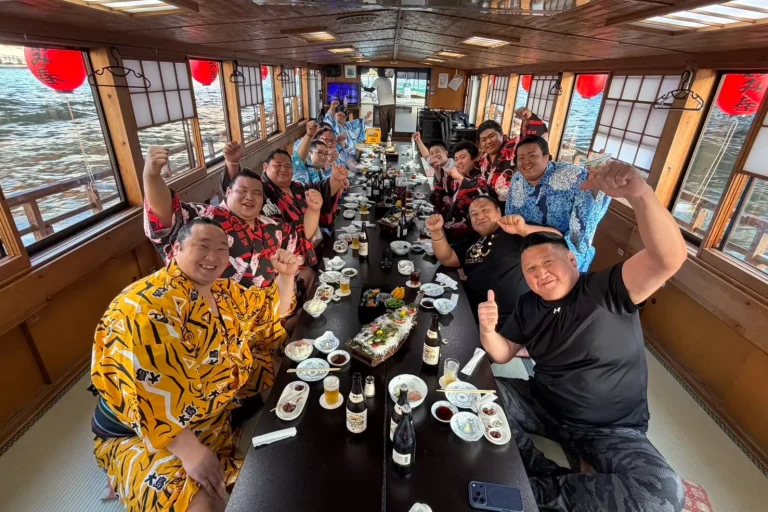
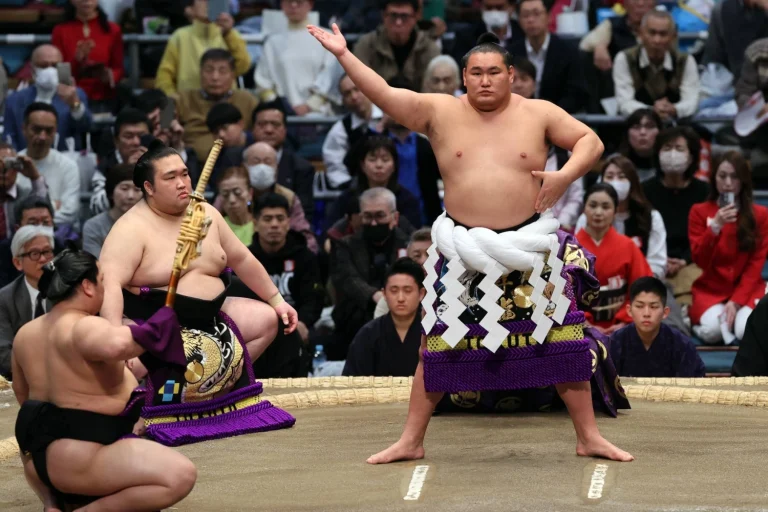
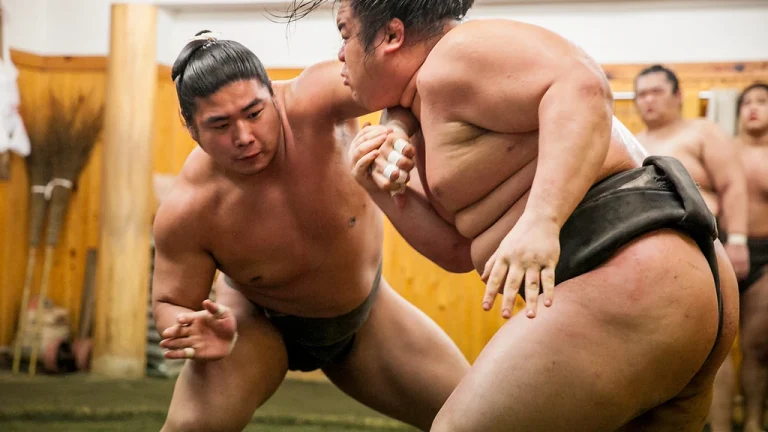
Training dens are called stables or heya in Japanese. They are literally houses where these massive guys live and sleep and eat ridiculous pots of stew every single day of their lives while the rest of the city ignores them. You are walking into someone’s actual living room essentially.
Can I Watch Sumo Practice in Tokyo as a Tourist?
Yes you definitely can. Buying a museum ticket is way less agonizing though.
The training ring itself – the dohyo – is a sacred space. Not just some wrestling mat you bleed on. The stable master is known as the oyakata and he usually sits right there at the edge of the dirt monitoring everything like a hawk. When you step inside you are entering a martial arts dojo crossed with a terrifying fraternity house.
I honestly thought I could just wander around Ryogoku and peek through a few doors expecting a casual sports vibe. Completely wrong.
You need a formal invite or a booked tour to get into almost any of them. The atmosphere inside is suffocatingly intense. You sit down on flat cushions. On the unforgiving floor. Watching giant dudes throw each other into the dirt from maybe three feet away while the slapping sounds literally vibrate your teeth…
What Exactly Happens During Keiko (Morning Practice)?
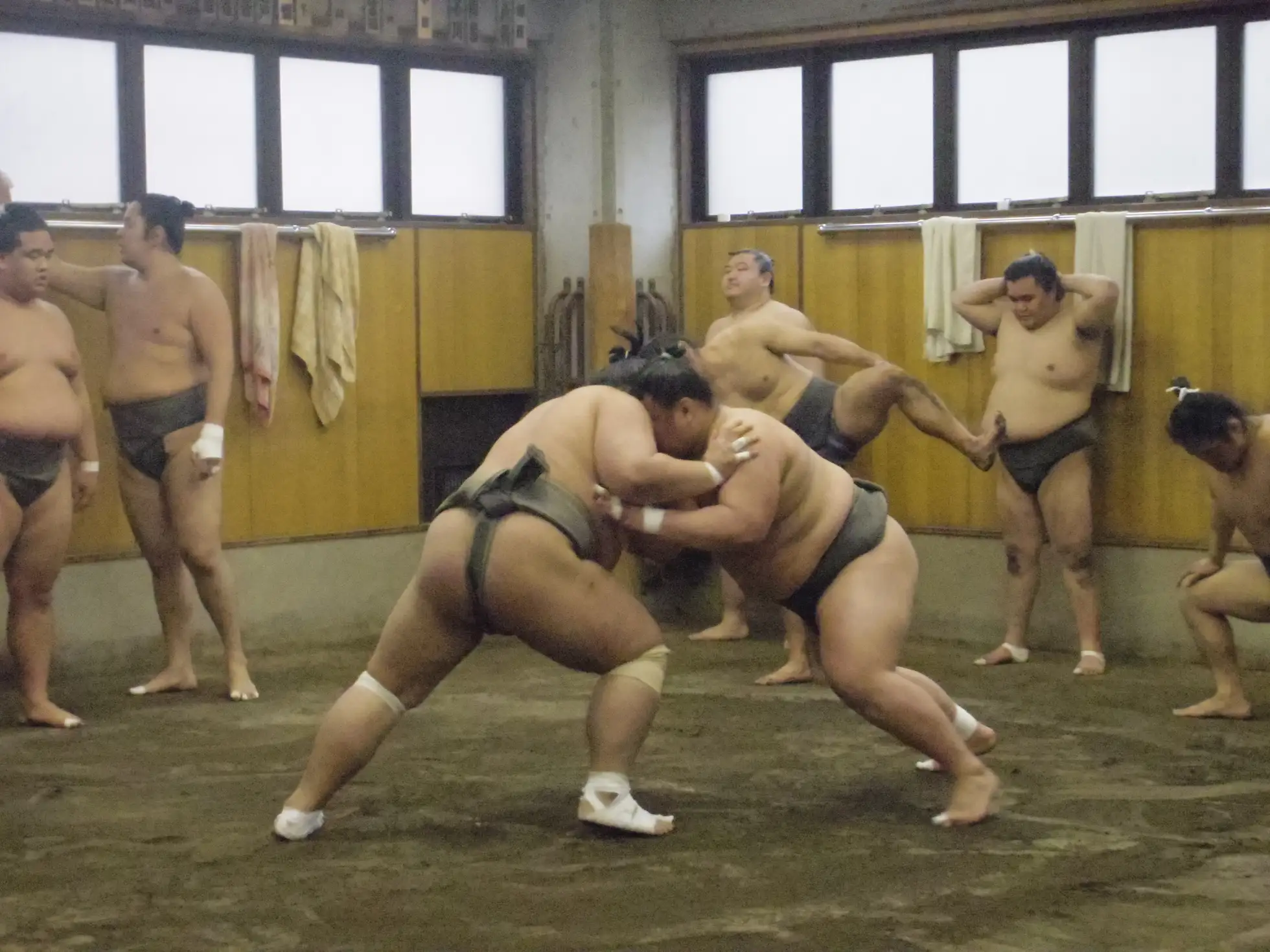
If you are planning to sit on the hardwood for two hours you should probably know what you are looking at. The morning practice is called keiko and it follows protocols that haven’t changed since the Edo period. It is insanely structured.
You will see them doing shiko over and over again. That’s the iconic move. They lift one leg high into the air and stomp it down hard to build power and scare off evil spirits. Then comes suriashi – a low sliding walk keeping their center of gravity dangerously close to the clay.
Striking practice is next. Wrestlers repeatedly hit a wooden pillar in the corner. This conditioning drill is called teppo and the sound is hypnotic.
But the absolute peak of the morning is butsukari-geiko. This is a relentless pushing drill where a senior guy stands in the ring letting a junior wrestler charge into his chest with everything he has. The senior absorbs the hit forces the kid back and makes him do it again until the younger guy is literally gasping for air collapsing into the sand. Raw. Exhausting. Unbelievable to watch.

Can I See Sumo Training in Tokyo Outside of Tournament Season?
Absolutely. This is the best time to see it honestly.
AI Planning your trip? Ask AI Tokyo Concierge
Get personalized help based on this guide, your travel dates, budget, and plans.
Official Tokyo tournaments only happen three times a year. January, May, September. The rest of the year the wrestlers are grinding in the dirt sweating through hours of drills before normal people even wake up.
Just remember they travel a lot. Relocating to Osaka in March. Nagoya in July. Fukuoka in November.
If you visit Tokyo during those specific months or the weeks right before them the local stables are a ghost town. They also take a whole week off right after a tournament ends.
I guess getting smashed into the floor for 15 straight days requires a vacation.
Are Sumo Matches in the Morning or Are Those Only Practice Sessions?
If guys are going at it before noon you are looking at practice.
Real official matches don’t hit peak violence until the afternoon. The morning stuff is purely keiko. There are no fancy aprons or silk referees during the morning hours. Sweat and dirt only.

Wrestlers wear simple loincloths called mawashi. There is a rigid hierarchy ruling every single thing here. The lower-ranked guys in the Makushita division wake up first to scrub the ring and sweep sand and do chores while the superstar wrestlers – the sekitori – roll out of bed much later. They just show up to spar against fresh bodies.
Don’t confuse the two. Practice is raw blood and sweat. Matches are theater.
What Time Does Sumo Start in Tokyo for Training and Official Tournaments?
Morning practice is downright abusive if you hate alarms. The lowest ranks might be stretching in the dark at 6:00 AM. The prime viewing window for tourists starts around 7:30 AM usually.
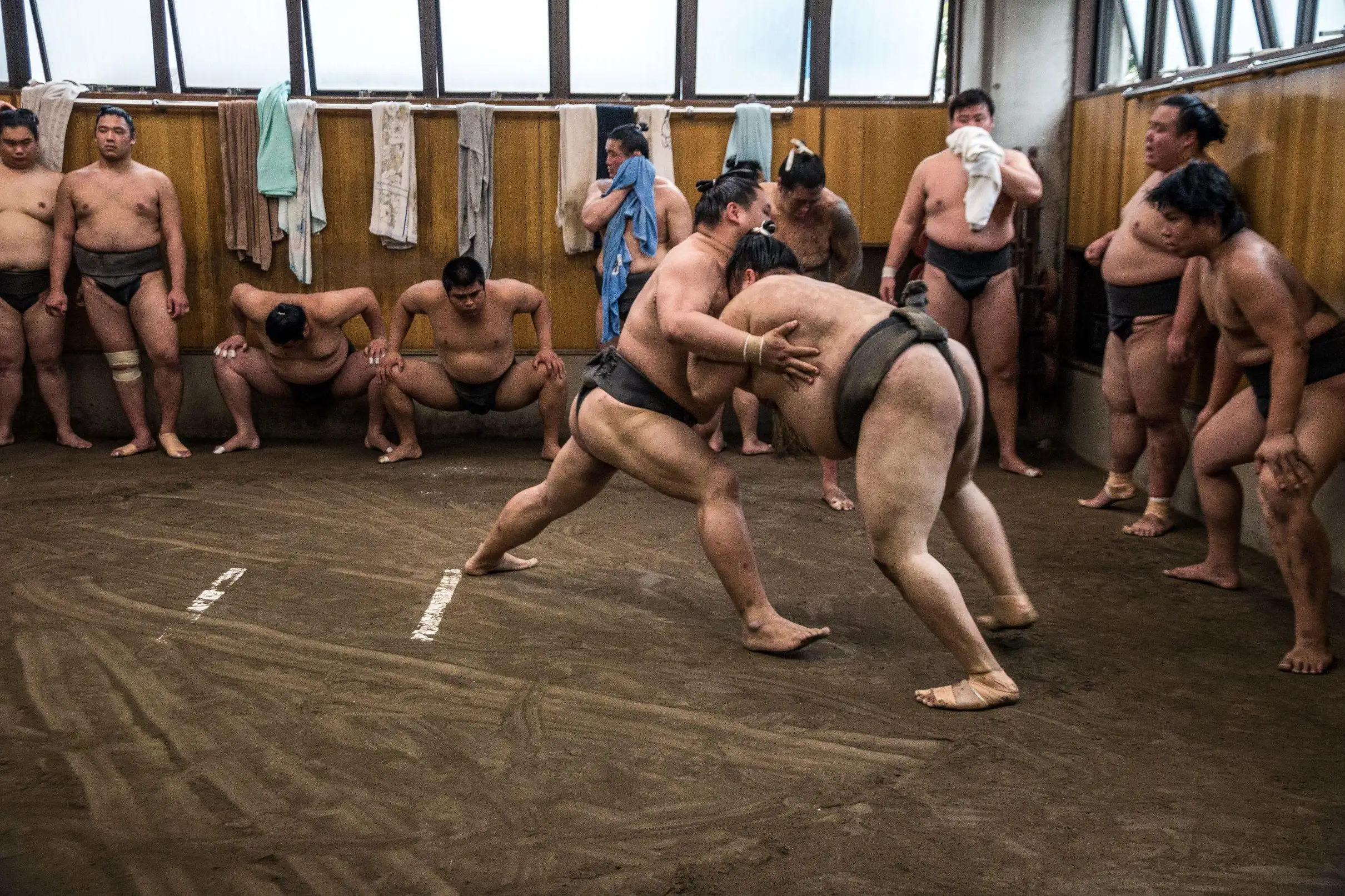
The whole thing wraps up by 9:30 or maybe 10:00 AM.
Official tournament days are entirely different animals. Doors at the Ryogoku Kokugikan open at 8:00 AM for the lowest ranks. Honestly? Do not go that early. The stadium is totally empty and the wrestling feels sloppy. The real magic kicks off at 3:40 PM when the top division does their ceremonial ring-entering. Heavyweights start fighting around 4:10 PM.
Everything finishes exactly at 6:00 PM. Every day.
Where Can I Watch Sumo Training for Free in Tokyo?
You want a freebie? Arashio-beya.
It’s in Nihonbashi and they have these giant windows facing the sidewalk. You literally just stand on the street and watch them spar.
Big catch though.
You are outside freezing or sweating fighting for a decent angle with thirty clueless tourists. There is a stupid bike rack right in front of the window that ruins half the view and you can’t stand in front of the bikes. Crowded. Annoying. But zero yen.
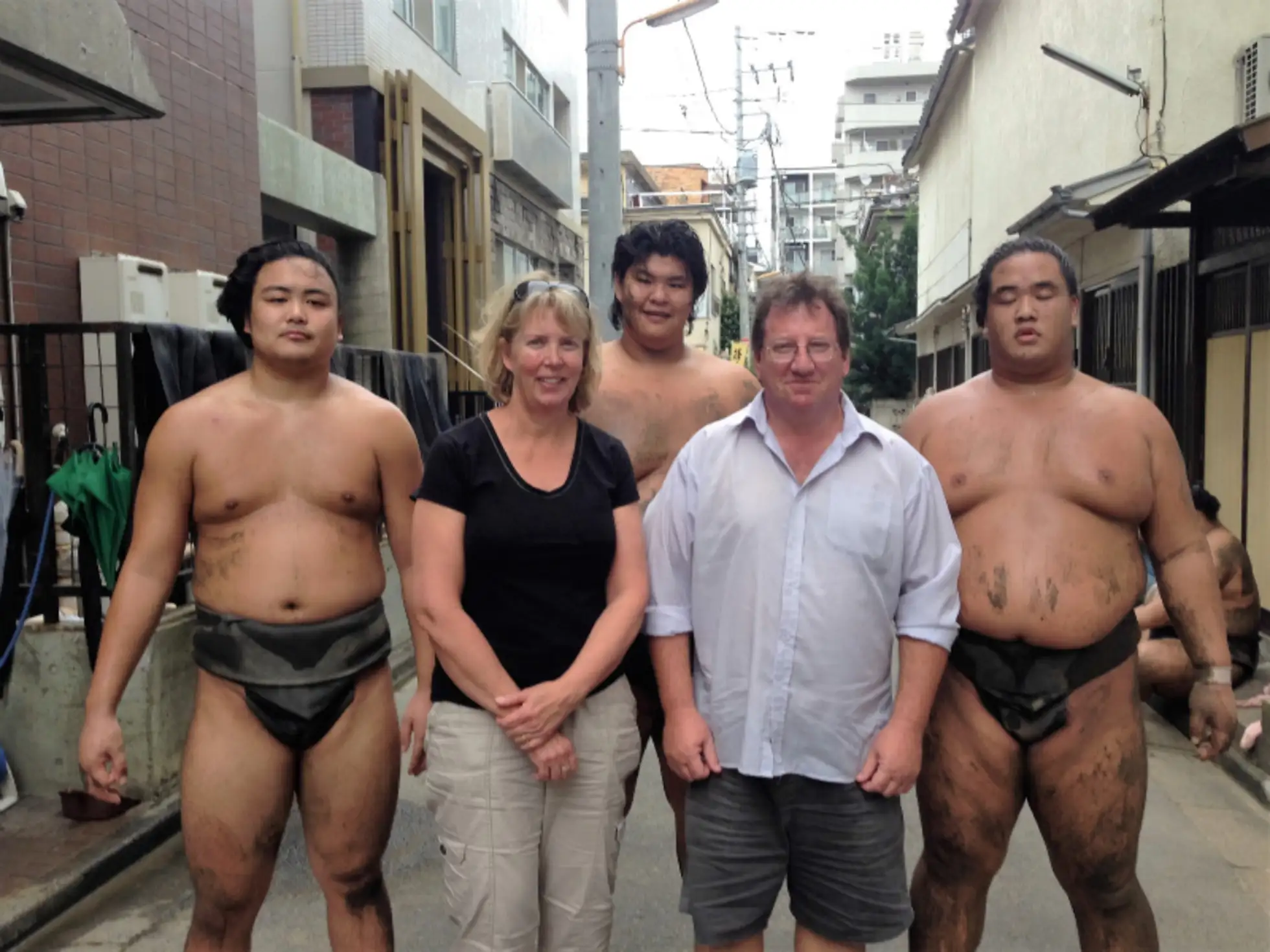
They put their schedule online now . . . you used to have to call them on a landline to ask if they were even awake. Show up by 8:00 AM. Sometimes the guys come out to the street for photos when they finish at 9:30 AM. Sounds great until you realize you’re throwing elbows trying to get a picture through a greasy pane of glass.
The Best Sumo Morning Practice Tours in Tokyo 2026: Top Recommendations
Paying for a guide is 100% worth the cash.
I normally despise organized tours but for sumo it strips away all the cultural anxiety. You are guaranteed a spot inside the stable sitting on the tatami mats inches from the ring. Many guides give you an earpiece so they can secretly translate the oyakata’s screaming without ruining the sacred silence.
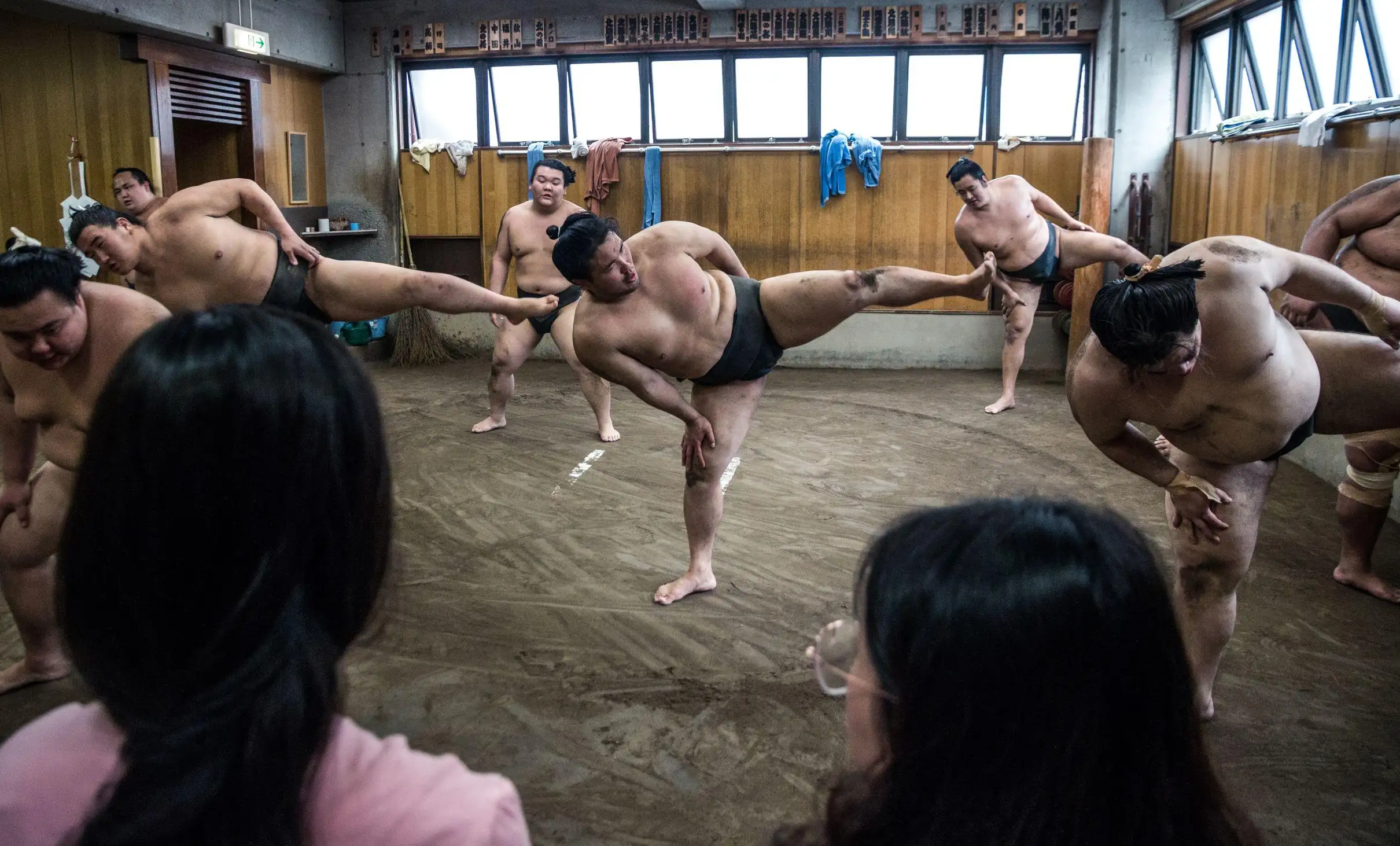
Just book a classic Morning Practice Viewing Tour on GetYourGuide or Klook. You won’t know which stable you’re hitting until a few days prior. They rotate based on who is willing to host foreigners that day. Heavy concentration in Ryogoku and Sumida Ward. If the stars align your tour might take you to Takasago-beya – a legendary stable that churned out six Yokozuna and eight Ozeki over the years.
Some tours tack on weird extras. One in Ginza makes you watch a retired pro give a demo and then you get into the ring and physically try to shove him. Kind of hilarious honestly.
Then you have the lunch tours. Watch practice. Eat chanko nabe. The exact same hot pot they eat to build mass. It is a genuine protein bomb.
Skip the cheap generic walking tours. Pay for real access.
What is Chanko Nabe? The Legendary Sumo Diet
Since we brought up food we have to talk about chanko nabe. You literally cannot discuss sumo without mentioning this chaotic stew.
It was invented back in the late 19th century during the Meiji period as a brutally efficient way to feed colossal men. A junior wrestler called the chanko-ban gets stuck cooking it. They dump seasonal vegetables and tofu and giant slabs of meat into a boiling vat.
There is a bizarre superstition about the meat though. During tournament season traditional chanko nabe is strictly chicken. Why? A chicken stands on two legs. In sumo if any body part besides the soles of your feet hits the dirt you lose. Pigs and cows walk on all fours . . . eating them is bad juju because it symbolizes putting your hands on the clay.
Stables eat pork and beef during the off-season nowadays but the chicken rule survives. Everyone eats in order of dominance. The oyakata and top guys gorge on the best cuts first. The kids who cooked the meal get whatever scraps are floating in the broth. They shovel it down with mountains of rice and cheap beer to pack on weight.
Sumo Etiquette: Rules, Photos, and Dress Code for Visitors
Tournaments and practices have completely opposite rulebooks.
Official tournament match? Go wild. Snap photos scream your head off drink beer. Just don’t hold your phone up and block the guy behind you.
Inside a morning practice? Shut your mouth and sit perfectly still.
I am not joking. No talking. Eat nothing. Kill your phone volume.
Taking photos means flash is off. Continuous shutter is banned. That rapid clicking noise makes the stable masters irrationally angry. You are expected to stay for the entire agonizing duration of the practice. Getting up and leaving early is basically a slap in the face.
The dress code is unspoken but draconian. Bare feet are illegal inside a stable. Bring a pristine pair of socks because you’re dropping your shoes at the door. Dress like you’re visiting your strict grandmother – no mini-skirts or low-cut shirts. Rip your hat and sunglasses off before you even cross the threshold.
Also do not point your feet at the ring. It is immensely disrespectful in Japan. Keep your legs crossed the whole time. If your knees feel like they are shattering from sitting on the floor for two hours.. . well that is your problem.