Being a sumo wrestler is a bizarre gig. You spend your mornings smashing your head into another grown man’s chest, your afternoons napping, and your evenings eating ungodly amounts of chanko nabe. Is it worth it? The cash, I mean. We see the envelopes being chopped in the air after a bout – hyah! – the giant Emperor’s Cup, the flashing cameras. But what actually lands in the bank account?
Honestly, it’s a weird mix of boring “government employee” stability and chaotic “lottery winner” wealth.
Yokozuna Base Salary: Monthly Earnings of a Grand Champion
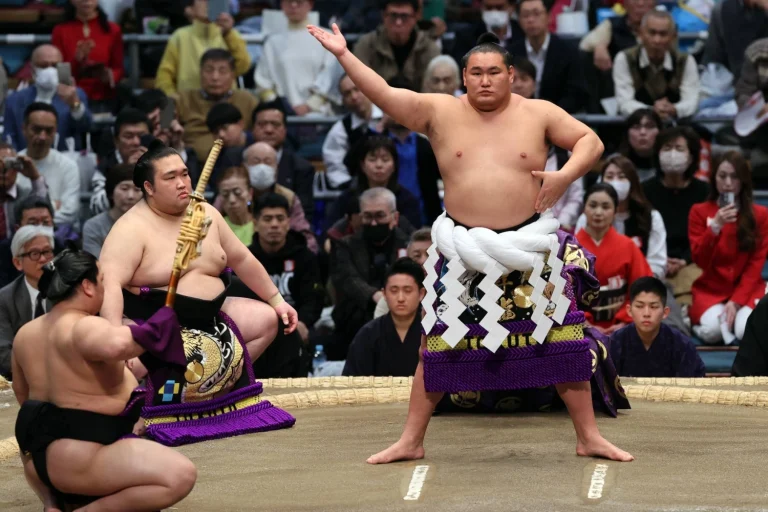
If you make it to the top – and I mean the very top – the pay is solid. Not “LeBron James” solid. Think “very successful dentist” solid. As of 2026, a Yokozuna pulls in a base salary of 3 million Yen per month. That’s roughly $20,000 USD depending on how the exchange rate is behaving that week.
That’s $240,000 a year just for showing up and wearing the white rope.
Sounds decent, right? But you have to remember the pressure. You can’t just be “good.” If a Yokozuna starts losing, he doesn’t get a pay cut – he gets forced into retirement. That salary is basically hazard pay for job security that doesn’t exist. There are no multi-year contracts here. You perform, or you quit.

The Sumo Pay Scale: Salary Breakdown by Rank (Ozeki to Maegashira)
The financial drop-off in sumo is steeper than the dohyo itself. The money is good for the Sekitori (the top two divisions), but fall one rank too low and you’re basically working for free.
Here’s the monthly breakdown for the guys who actually get a paycheck:
- Ozeki: 2.5 million Yen (~$16,500)
- Sekiwake: 1.8 million Yen (~$12,000)
- Komusubi: 1.7 million Yen (~$11,300)
- Maegashira: 1.4 million Yen (~$9,300)
- Juryo: 1.1 million Yen (~$7,300)
But wait, there’s more stuff. Sekitori also receive perks that don’t appear on the base salary sheet. They get a travel allowance for the regional tours (Jungyo), which can add another $10,000 to $15,000 annually depending on rank. They even get specific stipends for “hairdressing” (tokoyama fees) to maintain those elaborate topknots.
The “Hell” of the Lower Divisions: Allowances for Makushita and Below
See that cliff mentioned above? If you are a Juryo wrestler earning $88k a year and you lose just enough matches to drop to Makushita rank, your salary goes to zero.
Zero.
AI Planning your trip? Ask AI Tokyo Concierge
Get personalized help based on this guide, your travel dates, budget, and plans.
Wrestlers in the lower four divisions (Makushita, Sandanme, Jonidan, Jonokuchi) are considered “in training.” They aren’t professionals; they are apprentices. Instead of a salary, they receive a “Basho Allowance”—a small stipend paid once per tournament (every two months) to cover toothpaste and phone bills.
- Makushita: ~165,000 Yen ($1,100) per tournament.
- Sandanme: ~110,000 Yen ($730) per tournament.
- Jonidan: ~88,000 Yen ($580) per tournament.
- Jonokuchi: ~77,000 Yen ($510) per tournament.
Do the math. A kid in Jonokuchi is living on $3,000 a year.

They sleep in a communal room with 20 other guys, wake up at 5:00 AM to cook for the senior wrestlers, clean the toilets, and scrub the backs of the salaried guys in the bath. It is arguably the most terrifying financial structure in professional sports: you are either middle class, or you are living in feudal poverty.
Kensho Envelopes: Understanding the Sponsorship Cash in the Ring
This is the part everyone loves. The kensho. Those white envelopes the referee (gyoji) hands to the winner on a fan. Each envelope represents a sponsorship from a company—usually food brands, local businesses, or sometimes random anime companies.
Here is the secret: The wrestler doesn’t keep all that cash.
A single banner costs the sponsor 70,000 Yen.
Back in the day, the split was 30k cash, 30k into a retirement fund, and 10k to the Association. But recently (around May 2025), things shifted. The Association, trying to force wrestlers to save more, adjusted the ratio. Now, the wrestler usually walks away with only 10,000 Yen (approx $65) in cold hard cash per envelope. The bulk- 50,000 Yen – gets locked away in their tax-deferred retirement account.

When you see Hoshoryu or Terunofuji grab a stack of 50 envelopes, they aren’t walking to the locker room with $25,000 in spending money. They’re holding maybe $3,000 cash and a really healthy 401(k) contribution.
The Hidden Economy: Tanimachi and “Tax-Free” Perks
If the salary is capped and the prize money is taxed, how do sumo wrestlers afford those luxury watches and designer yukata? Enter the Tanimachi.
Named after a district in Osaka where wealthy patrons used to live, a Tanimachi is a private sponsor. These are company CEOs, doctors, or wealthy fans who “adopt” a stable or a specific wrestler.
The support they provide is off the books and crucial to the ecosystem:
- Dinner Parties: Patrons regularly take wrestlers out for feasts that cost thousands of dollars.
- Goshugi (Tips): It is customary for patrons to slip cash into a wrestler’s hand or sleeve during these dinners. For a top star, a single handshake could come with a 100,000 Yen note.
- Gear: Those ornamental Kesho-Mawashi (the massive embroidered aprons worn during ring entering ceremonies) cost upward of $10,000 to $20,000. Wrestlers almost never buy these themselves; they are gifts from the Tanimachi.
For a charismatic wrestler, the “Tanimachi income” can sometimes exceed their actual salary.

Tournament Prize Money: Financial Rewards for Winning the Emperor’s Cup
The Yusho. The championship.
For decades, the prize for winning the top division Makuuchi championship was stuck at 10 million Yen. It was nice, but inflation was eating it alive. Recently, the Sumo Association finally cracked open the vault. The prize money for the Emperor’s Cup winner has jumped significantly – now sitting closer to 30 million Yen (around $200,000 USD).
And that’s just the main check.
There are also the Sansho – special prizes for “Outstanding Performance,” “Fighting Spirit,” and “Technique.” Each of these nets the wrestler another 2 million Yen.
If a lower-ranked guy wins the tournament and two special prizes? He could walk away with $250,000 in a single Sunday afternoon. That changes lives.
Mochikyukin: The Complicated Bonus Formula
While the Kinboshi (gold star) gets all the press, the real financial engine of a sumo career is the Mochikyukin system. This is a cumulative bonus system that is confusing to outsiders but vital to insiders.
Think of it like a stock dividend. Every time a wrestler achieves a kachi-koshi (a winning record of 8 wins or more), he gains “points” on his record.
- 1 win = a tiny addition to the base unit.
- Winning a championship = a massive injection of points.
These points are converted into cash and paid out six times a year for the rest of their career in the top divisions. A veteran wrestler who has been grinding out winning records for 10 years might have a “Mochikyukin” payment that adds an extra $5,000 or $10,000 to every single paycheck, regardless of how he performs today. It rewards longevity and consistency, not just flashiness.
The Kinboshi Bonus: Lifetime Pay Raises for Defeating a Yokozuna
This is my favorite weird sumo rule. The Kinboshi or “Gold Star.”

If a Maegashira (a rank-and-file wrestler) defeats a Yokozuna, he gets a bonus. But it’s not a one-time cash handout. It’s an annuity.

He gets 40,000 Yen added to his bonus pay for every single tournament for the rest of his career.

Beat a Yokozuna once? That’s an extra $1,600 a year, forever.
Beat them 10 times? That’s $16,000 a year, on top of your salary, until you retire.
It’s the only sport I know where a single good day at work gives you a permanent raise. A guy like the retired Aminishiki, who was a master at upsetting big guys, built up a massive bonus accumulation just by being a giant killer.
Income Beyond the Ring: Endorsements and Retirement Bonuses
Base salary is fine, but the real rich list guys make their money outside.
Top wrestlers—especially popular ones like Ura or Takakeisho—get endorsement deals (CMs). You’ll see them selling tea, mattresses, or computers. A popular Ozeki can easily double his annual income through commercial deals.
Then there is the retirement payout.
Remember all those deductions from the Kensho envelopes? And the accumulation from wins? When a wrestler retires, the Association hands them a check. For a long-serving Yokozuna like Hakuho, that check was rumored to be in the hundreds of millions of Yen. We’re talking millions of dollars in a lump sum.
The Golden Ticket: Owning “Elder Stock” (Toshiyori-kabu)
Here is the ultimate financial endgame. When a wrestler retires, he usually wants to stay in the Sumo Association as an Oyakata (Elder/Coach) to keep receiving a salary until age 65.
But there is a catch: There are only 105 Elder names in existence.
To become an elder, you must acquire one of these names (stocks) from a retiring elder or a widow. This creates a clandestine, high-stakes market.
While the Association officially prohibits buying and selling these names, it is an open secret that they trade hands for massive sums—historically rumored to be between 100 million to 300 million Yen ($700k to $2 million USD).
If a wrestler has saved his prize money and has a wealthy Tanimachi to help him buy a stock, he is set for life. If he hasn’t saved enough? He is forced to leave the sumo world entirely and go find a normal job. This is why that “forced savings” from the Kensho envelopes is so critical.
Who Is the Highest Paid Sumo Wrestler of All Time?
It has to be Hakuho Sho.
The man won 45 championships. He fought in the top division for two decades.
Between his monthly salary (20 years x high earnings), his record-breaking prize money (45 Yusho wins), and the thousands and thousands of Kensho envelopes he picked up, his career earnings are estimated to be over 2 billion Yen ($15–$20 million USD).
Asashoryu was probably the first to really break the commercial barrier in the 2000s, living a flashy lifestyle with custom suits and Hummers, but Hakuho’s longevity makes him the undisputed cash king of the dohyo.
Sumo vs. Pro Wrestling: How Do the Top Salaries Compare?
People always ask this. “Do they make WWE money?”
Short answer: No.
Roman Reigns or Cody Rhodes are making $5 million to $10 million a year guaranteed, plus merchandise cuts.
A Sumo Yokozuna is capped at a base of ~$240k. Even with a perfect year—winning every tournament, maxing out sponsorships—a sumo wrestler might hit $1 million to $2 million.
Sumo is prestigious, but it’s a domestic sport. WWE is a global media empire. The ceiling in pro wrestling is just way higher. But the floor in Sumo (for a Sekitori) is probably better than an indie wrestler or a lower-card guy in a smaller promotion. A mid-level sumo wrestler making $150k a year with free housing and food is doing better than 90% of pro wrestlers in the world.
The Financial Reality: Expenses, Taxes, and Stable Costs
Before you go sign up for a sumo stable, look at the deductions.
Sumo wrestlers are considered independent contractors for tax purposes in Japan. That means they pay a steep income tax—often around 40-45% for the top earners.
Then there are the “Tsukebito” costs.
High-ranking wrestlers have attendants (junior wrestlers) who cook, clean, and scrub their backs. The Association doesn’t pay these guys extra to be servants; the Sekitori does. The senior wrestler is expected to buy their food, take them out to dinner, give them allowances, and sometimes even buy their clothes.
A generous Ozeki might spend $3,000 a month just feeding his entourage.
Is the money good? Yeah.
Is it easy? Hell no.
You pay for every Yen with sweat, blood, and a knee joint or two.