Your kid just watched a sumo clip on YouTube for the fourteenth time. They’re stomping around the living room, slapping their thighs, doing that leg-lift thing. You’re thinking: we’re going to Tokyo. We should do something with sumo. But then you start Googling and it gets confusing fast. Tournament tickets are sold out months ahead. Morning practice stables have a minimum age of 12. Half the “experiences” look like tourist traps where a guy in a mawashi poses for selfies.
Here’s what I found after pulling apart every option available in Tokyo right now, sorted by what actually works when you’ve got children with you.
The tournament itself (if your timing lines up)
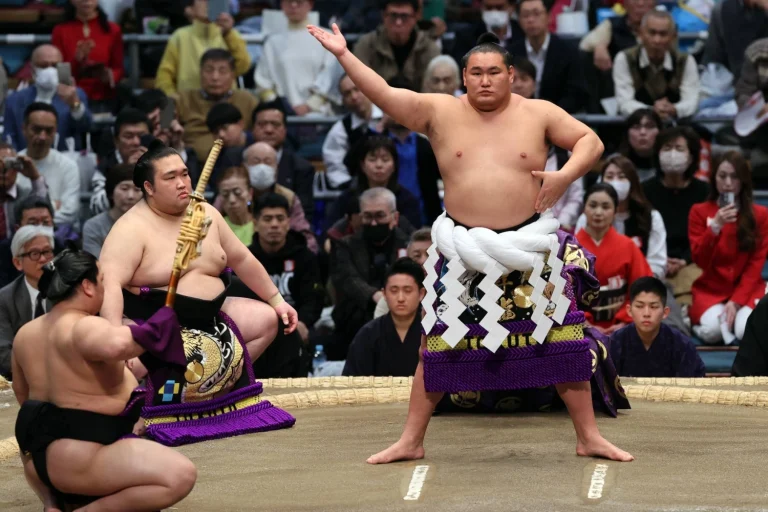
Three of the six annual Grand Sumo tournaments happen at Ryogoku Kokugikan, the main sumo stadium in Tokyo’s Sumida ward. The 2026 dates are January 11–25, May 10–24, and September 13–27. Each tournament runs 15 days.
Tickets go on sale roughly one month before opening day. The May 2026 tournament sold out entirely, every single day, with no same-day availability. January and September are slightly easier, but “easier” still means refreshing the Ticket Oosumo website the morning sales open.
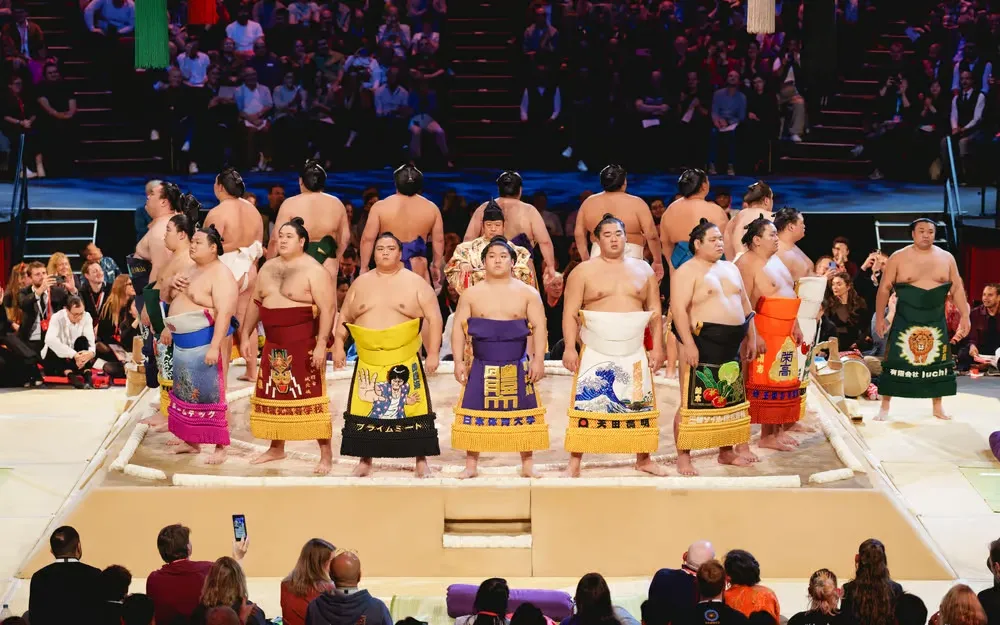
Here’s what most guides skip: your ticket is valid all day, and you can leave and re-enter once before 5:00 p.m. The lower-ranked wrestlers compete in the morning when the stadium is half-empty and quiet. This is actually the best window for families. You show up around 10:00 or 11:00 a.m., grab seats in the upper balcony (cheaper, and kids can see the whole ring from above), watch a few bouts, leave for lunch, and come back in the afternoon if everyone still has energy.
Box seats fit four people. You sit on cushions with your shoes off. A toddler will treat this like a living room. Older kids will be fine.
One more thing. The stadium sells bento boxes, yakitori, and beer inside. The food is decent. You won’t starve.
Morning practice at a sumo stable
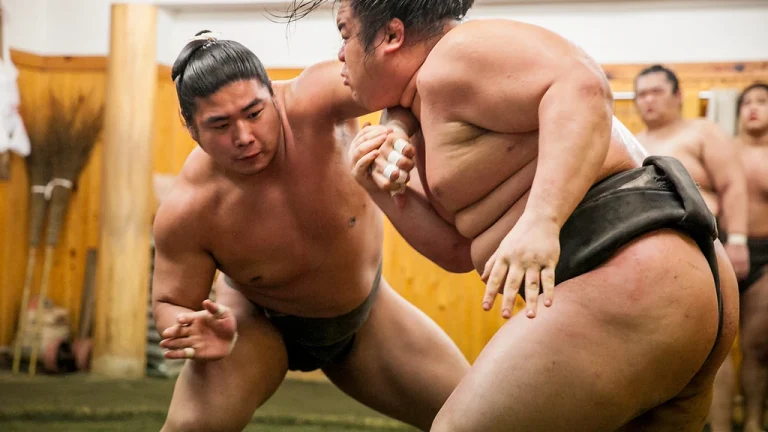
This is the experience that sounds the most authentic, and it is. You sit on the floor of a working stable and watch wrestlers train. They slam into each other at full speed, six feet away from you. The floor shakes. Your kids will stare.
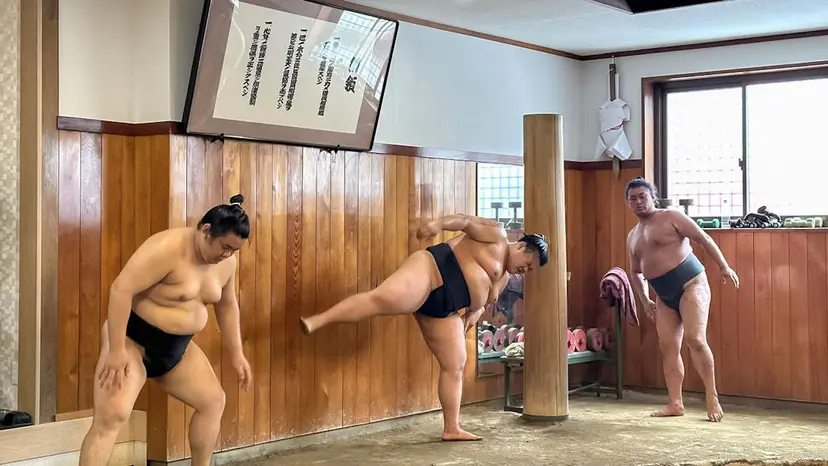
The catch: most stables require visitors to be 12 or older. A few operators run tours where younger children can attend as observers but can’t enter the training area. Check the specific tour before you book. Klook and Viator both list morning practice tours in the Oshiage area near Ryogoku, and most start around 8:00 a.m. after the wrestlers have finished warming up. The whole thing lasts about three hours including a chanko nabe meal.
Chanko nabe is the hot pot that sumo wrestlers eat to gain weight. It’s a big communal pot of chicken broth with vegetables, tofu, mushrooms, and meat. Kids who eat soup will eat this. Kids who don’t eat soup will eat the rice that comes with it.
AI Planning your trip? Ask AI Tokyo Concierge
Get personalized help based on this guide, your travel dates, budget, and plans.
If your children are under 12, skip the stable visit and look at the next two options instead.
Sumo shows and interactive experiences
These are purpose-built for tourists, and they don’t pretend otherwise. But the good ones are genuinely fun.
The Asakusa Sumo Club runs multiple daily shows with retired wrestlers. Your family watches a demonstration, gets the rules explained in English, and then — this is the part kids remember — somebody from the audience gets invited into the ring to try pushing a 300-pound man. The price includes chanko nabe afterward. They offer child pricing, and there’s no minimum age.
In Ginza, there’s a sumo show and photo experience that operates on a similar model: watch, learn, eat, take photos with wrestlers. It’s more polished and less rowdy than Asakusa.
The Shinjuku sumo show includes drinks for adults and runs in the evening, which makes it better for families with older kids or teenagers who won’t melt down at 7:00 p.m.
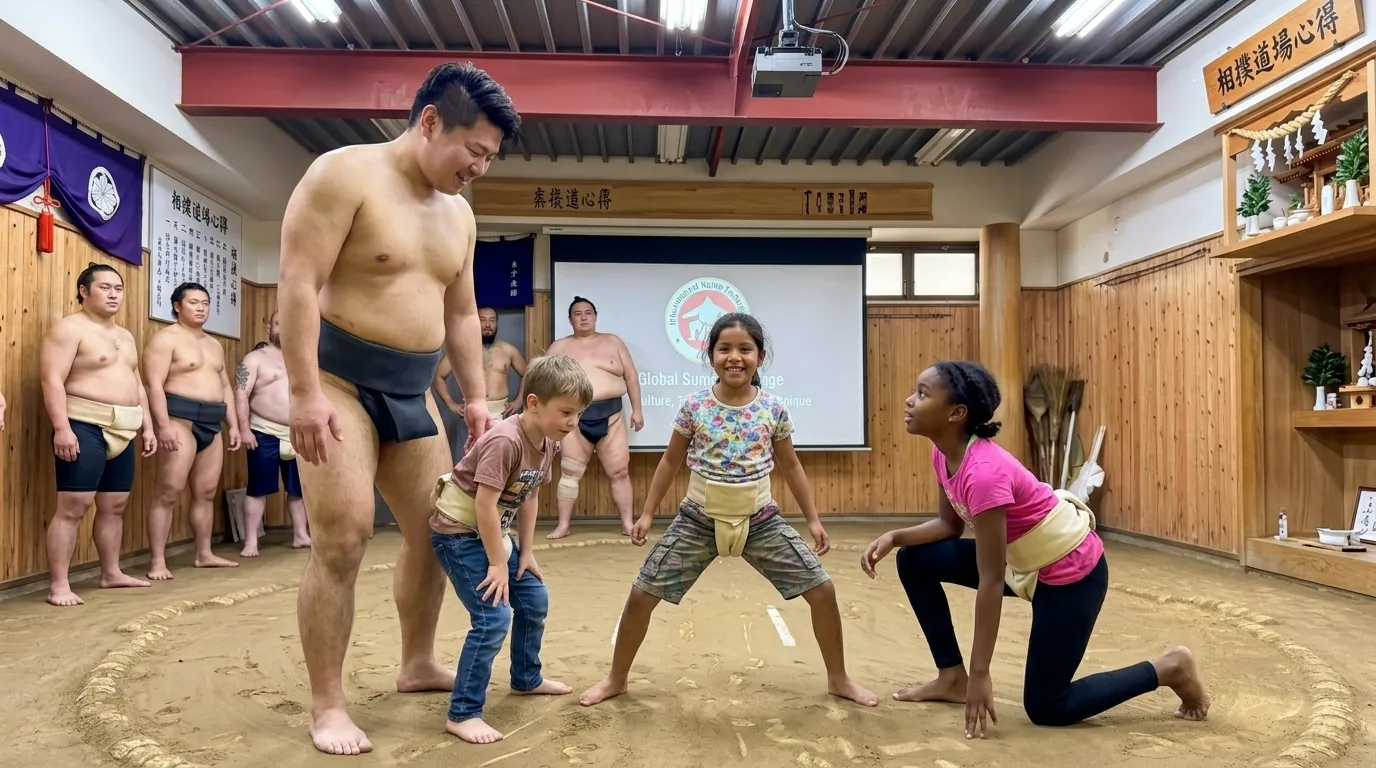
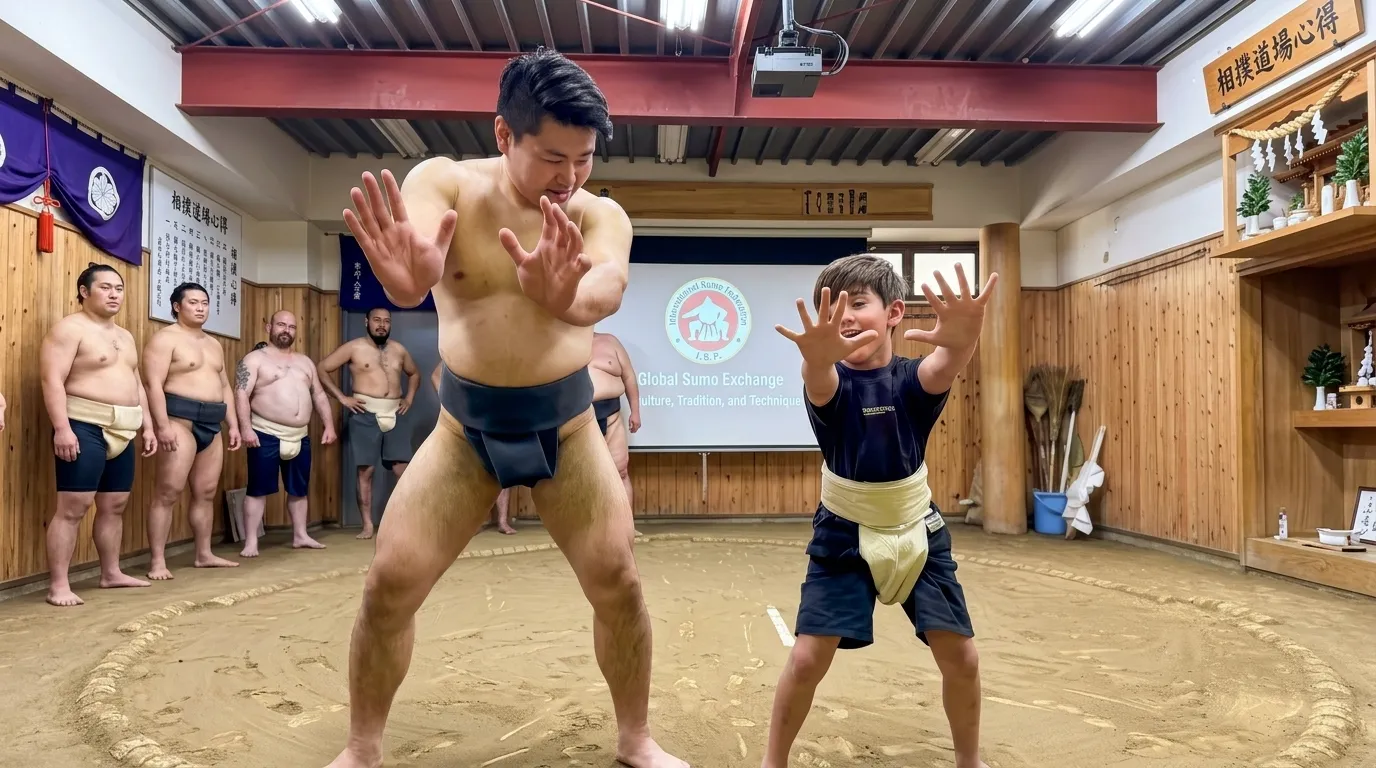
And then there’s the option where your kid (or you) actually gets in the ring with a retired wrestler and learns to do a proper shiko stomp. Several operators near Ryogoku and in Kawasaki run these sessions. Most are about two hours, include lunch, and let you take photos in a mawashi if you want. Your eight-year-old will talk about this for months.
Ryogoku on foot (free, no booking required)
Ryogoku is the sumo district. The stadium, the stables, the restaurants — everything is here, within walking distance of Ryogoku Station on the JR Chuo-Sobu Line.
Walk around in the morning and you will see actual sumo wrestlers on the street. They’re hard to miss. They wear traditional robes, wooden sandals, and they’re enormous. Your kids will notice before you do.
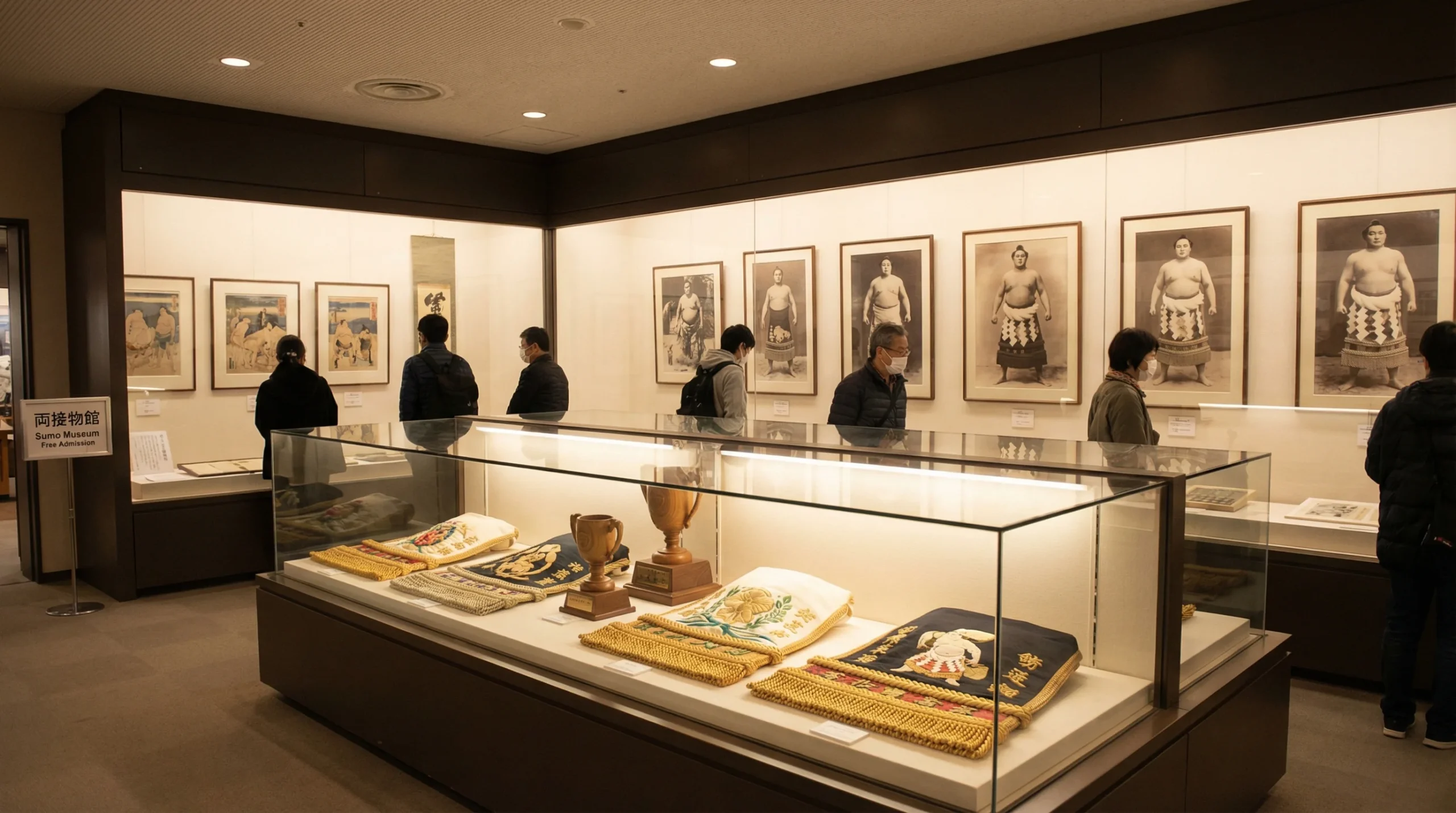
The Sumo Museum inside Ryogoku Kokugikan is free on weekdays when there’s no tournament running. It’s open from 10:00 a.m. to 4:30 p.m. and rotates exhibitions of old woodblock prints, ceremonial aprons, and handprint panels from past champions. It’s small. Thirty minutes is enough. But seeing the actual handprints — and realizing how big these hands are — tends to land with kids.
For lunch, pick any of the chanko nabe restaurants lining the streets around the station. Chanko Tomoegata and Chanko Kawasaki are two of the better-known ones. Most have picture menus. Some have English menus. All of them serve portions that will defeat you.
If you’ve got extra time, the Sumida Hokusai Museum is a 10-minute walk away and has Hokusai’s woodblock prints, including the wave one your kid has probably seen on a t-shirt. The Edo-Tokyo Museum reopened in March 2026 after a long renovation and covers the full history of Tokyo from the 1600s forward. Both are good with children.
What I’d actually do with a 6-year-old
Show up in Ryogoku around 10:00 a.m. Walk the streets. Spot some wrestlers. Hit the Sumo Museum if it’s a weekday. Eat chanko nabe for lunch. Then do the Asakusa Sumo Club show in the afternoon — it’s a short train ride from Ryogoku, your kid gets to watch real (retired) wrestlers up close, and the whole thing wraps up before anyone has a meltdown.
If your trip overlaps with a tournament, buy upper balcony tickets for one day and go in the morning. Leave by 1:00 p.m. unless your kid is genuinely still interested. Most aren’t, after a couple hours. That’s fine. You saw live sumo. That counts.
What I’d do with a 13-year-old
Morning practice at a stable, full stop. Book it through Klook or Viator, show up at 8:00 a.m., sit quietly on the floor, and watch. Then eat chanko nabe with the wrestlers. After that, walk to the Sumo Museum, and if there’s a tournament running, grab tickets for the afternoon session when the top-ranked wrestlers compete. The last few bouts of the day, from about 4:00 to 6:00 p.m., are where the atmosphere gets electric.
Practical notes
Tournament tickets: Buy through the official Ticket Oosumo site (sumo.pia.jp) or BuySumoTickets.com, which charges a markup but handles the Japanese-language booking process for you.
Budgeting: Upper balcony tournament seats run about ¥3,800 per person. Interactive sumo experiences range from ¥5,000 to ¥15,000 depending on whether lunch is included. Chanko nabe restaurants cost roughly ¥1,500–¥3,000 per person for lunch.
Getting there: Ryogoku Station is on the JR Chuo-Sobu Line and the Toei Oedo Line. From Shinjuku, it’s about 25 minutes. From Tokyo Station, about 15 minutes.
When to go: January, May, and September for tournaments. Any month for everything else. Sumo stables practice year-round except during tournaments and certain holidays.
Language: Most tourist-oriented sumo experiences have English-speaking guides. Tournament commentary is in Japanese only, but you don’t need to understand the words — two guys push each other out of a circle. Your kids will get it immediately.