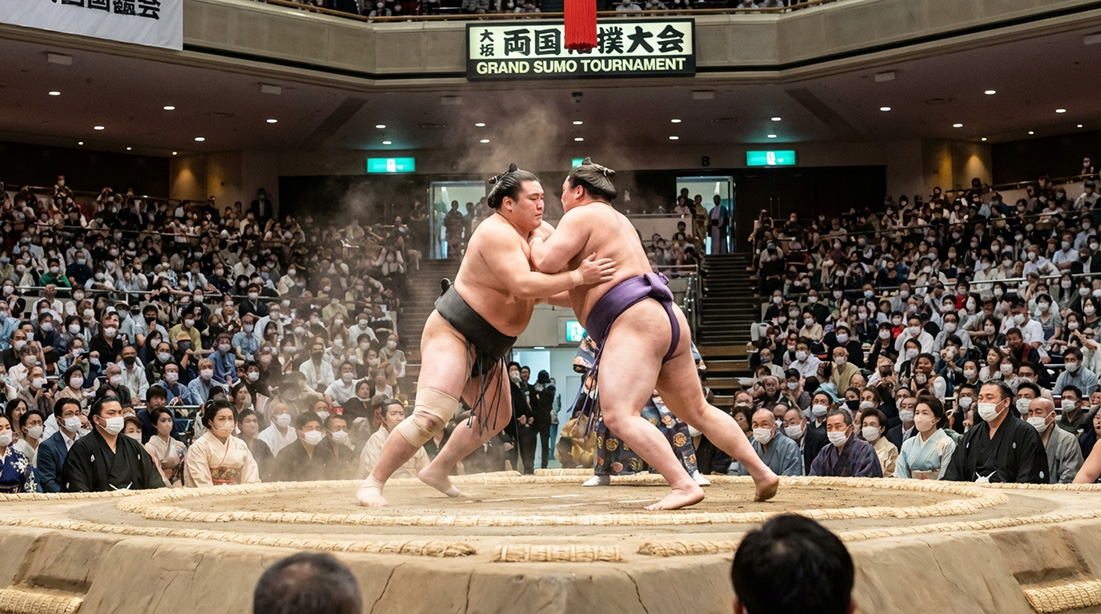
If you are plotting a Japan trip for 2026, seeing a honbasho – a sumo tournament – is probably on the list. It better be. The atmosphere inside Ryogoku Kokugikan is electric, this weird mix of sacred Shinto ritual and sweaty, violent athleticism. But here is the thing: they don’t fight year-round. Tokyo only gets three of the six annual tourneys.
Here is the schedule you need. Put these in your calendar.
- January Tournament (Hatsu Basho)
- Dates: January 11 – January 25, 2026
- Venue: Ryogoku Kokugikan, Tokyo
- Ticket Release: Early December 2025 (likely Dec 6th)
- May Tournament (Natsu Basho)
- Dates: May 10 – May 24, 2026
- Venue: Ryogoku Kokugikan, Tokyo
- Ticket Release: Early April 2026 (likely April 4th)
- September Tournament (Aki Basho)
- Dates: September 13 – September 27, 2026
- Venue: Ryogoku Kokugikan, Tokyo
- Ticket Release: Early August 2026 (likely Aug 8th)
Note: Ticket releases usually drop the first Saturday of the prior month, but the Japan Sumo Association (JSA) loves to keep us guessing. Check the site a month out. Don’t be lazy about it.
The 2026 Landscape: Who to Watch
Sumo is in the middle of a massive generational shift right now. For years it was just legendary Mongolian champions crushing everyone, but 2026 looks like the era of the “Young Guard.” Knowing who to scream for makes the bouts infinitely better.
- The Prodigy: Onosato
By 2026, Onosato should be the face of the sport. He shot up the ranks faster than almost anyone in history. Massive guy, technically brilliant, has that Yokozuna (Grand Champion) aura. If he’s fighting, don’t blink. - The Technician: Kotozakura (formerly Kotonowaka)
Son of a former great, carrying a famous name and all the heavy pressure that comes with it. He’s a master of yotsu-sumo – belt grip style. Slower, methodical, incredibly strong. - The Firebrand: Hoshoryu
Nephew of the legendary, controversial Asashoryu. Fights with a massive chip on his shoulder. Known for spectacular throws and staring people down. He doesn’t just want to win; he wants to toss his opponent into the third row. - The Dark Horse: Aonishiki
Keep an eye on this young Ukrainian kid. He’s been tearing through the lower divisions. Tipped to be a major disruptor in the top division by 2026.

How to Buy Sumo Tickets: Official Sites vs. Third-Party Resellers
Buying tickets is arguably the worst part of the whole experience. A total war of attrition.
The Official Route (Cheapest but Stressful)
The official site is sumo.or.jp. It directs you to the vendor – usually Ticket Oosumo.
- Pros: Face value. No markup.
- Cons: The site crashes. Constantly. Sales open at 10:00 AM JST and you are competing with thousands of scalpers and superfans. I’ve spent mornings refreshing a browser just to find everything sold out in 15 minutes. It sucks.
Third-Party Resellers (Pricey but Reliable)
If you aren’t awake at 2 AM in your home timezone to fight a Japanese server, use a service like BuySumoTickets.
- How it works: Preorder months in advance. They buy the tickets for you when sales open.
- The Catch: You pay a service fee. You don’t get to pick your exact seat number – just the category.
- Warning: Avoid generic mega-resellers like Viagogo or StubHub unless you are desperate. The markups are criminal – sometimes 300% – and if something goes wrong, good luck getting a human on the phone.
Seating Guide: Masu Boxes, Tamari Ringside, and Arena Chairs
Where you sit dictates the entire day. Seriously.
Tamari (Ringside)
Seats right next to the dirt (clay, actually).
AI Planning your trip? Ask AI Tokyo Concierge
Get personalized help based on this guide, your travel dates, budget, and plans.
- The Vibe: Terrifyingly close. You might get landed on by a 160kg man.
- The Rules: No eating. No drinking. No phones. You must sit cross-legged on a cushion. If you have bad knees, forget it.
- Availability: Nearly impossible for tourists. Usually go to high-ranking supporters.
Masu Seats (Box Seats)
The classic way to watch. You get a square patch of tatami flooring designated for four people.
- Reality Check: They say it fits four. It does not fit four full-grown Western adults comfortably. It fits two people comfortably, or three people awkwardly. If you’re a group of four guys, buy two boxes. Trust me.
- The Experience: Shoes off, sit on cushions, drink beer, eat yakitori. A picnic with violence.
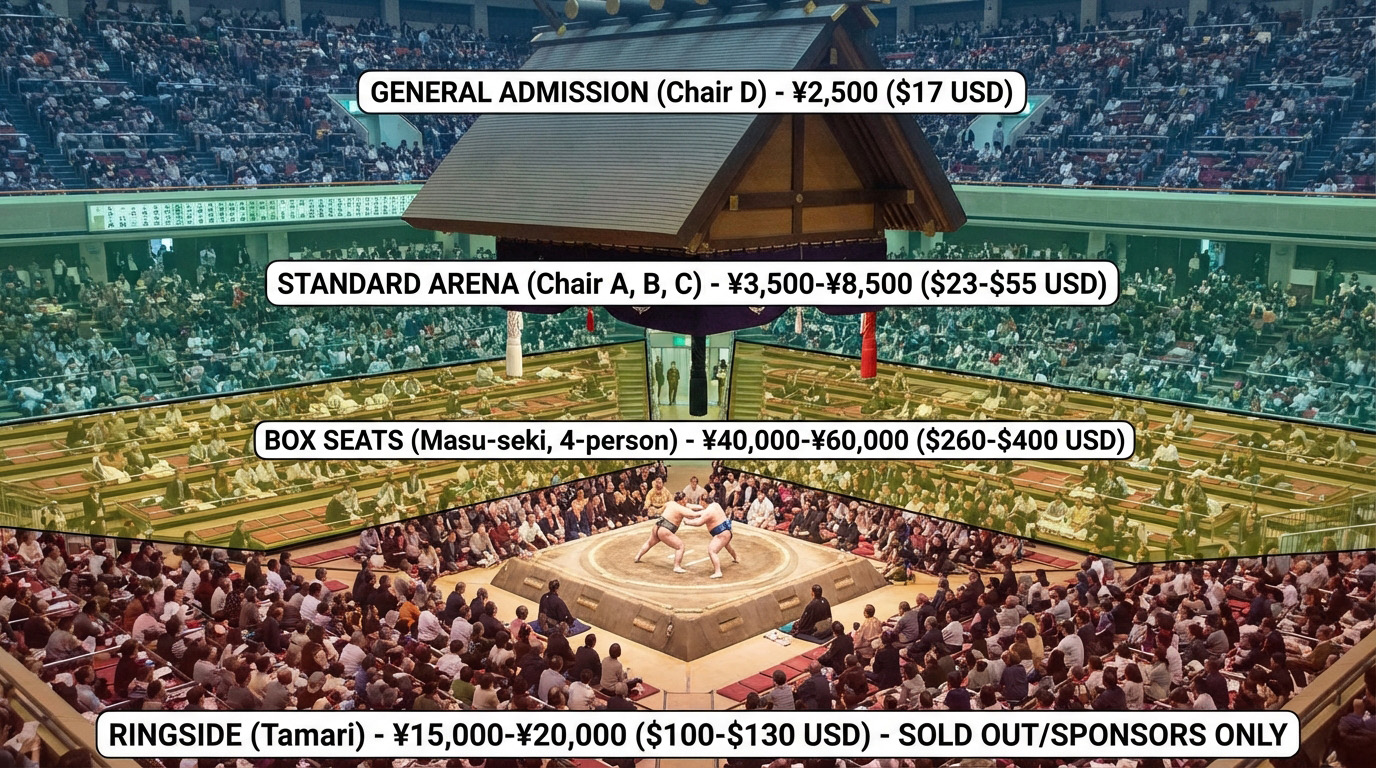
Arena Chairs (2nd Floor)
Standard stadium seating.
- Pros: Cheaper. You get a chair with a backrest. You can see the whole arena layout, which is actually beautiful.
- Cons: You’re far from the sweat and impact sounds.
- Tip: Row A on the second floor is surprisingly good value if you can snag it.
A Day at Ryogoku Kokugikan: Tournament Schedule and Timing
Don’t show up at 8 AM unless you are a hardcore fanatic. The arena opens early, but the top guys don’t fight until late afternoon.
- 8:30 AM – 2:00 PM: Lower Divisions (Jonokuchi to Makushita)
Stadium is empty. Wrestlers are young, hungry, unrefined. The slapping sounds echo loudly because no one is watching. Raw, but maybe boring for the casual fan. - 2:30 PM: Juryo Ring Entering Ceremony
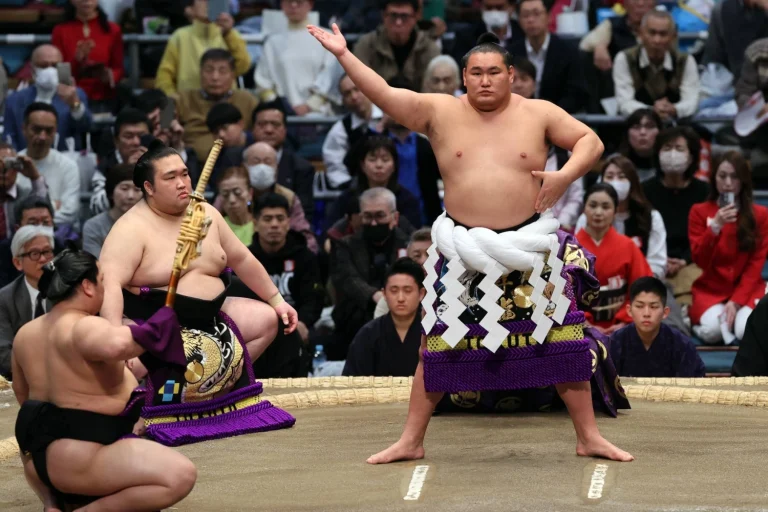
Second-tier wrestlers enter. They wear colorful ceremonial aprons (kesho-mawashi). Crowd starts filling in. - 3:50 PM: Makuuchi Ring Entering Ceremony
The main event. Top division wrestlers parade in. The atmosphere shifts. Gets heavy. - 4:00 PM: Yokozuna Ring Entering Ceremony
If there is an active Yokozuna (Grand Champion), he performs a specific, sacred ritual. Silent, then loud. Very cool. - 4:10 PM – 6:00 PM: Top Division Bouts
Biggest guys. Loudest cheers. The final bout usually ends exactly at 6:00 PM, followed by the bow-twirling ceremony (yumitori-shiki).
My advice? Show up around 2:00 PM. wander the stadium, buy food, settle in for Juryo, be ready for the big show at 4:00 PM.
Decoding the Rituals: What You’re Actually Watching
Sumo isn’t just wrestling; it is a Shinto ritual dedicated to the gods. Understanding the movements makes the slow pacing fascinating instead of tedious.
- The Salt Toss (Kiyome-no-shio): Before a match, wrestlers grab salt and toss it onto the ring. Purification. Drives away evil spirits and corruption. Some toss a polite pinch; others – the crowd favorites – throw massive clouds that hit the stadium lights.
- The Leg Stomp (Shiko): When they lift legs high and slam them down, they aren’t just stretching. They are stomping on “demons” hidden in the earth. Driving them away. A show of balance and spiritual dominance.
- The Water (Chikara-mizu): You’ll see the winner from the previous match hand a ladle of water to the next fighter. “Power water.” Rinses the mouth, purifies the body. Note: If a wrestler loses, he cannot give the water; a different attendant must do it so the bad luck isn’t passed on.
- The Referee’s Dagger: Look closely at the elaborately dressed referee (Gyoji). He carries a dagger (tanto) in his belt. Historically, this signified that if he made a bad call, he would commit seppuku (ritual suicide). Today he just submits a resignation letter (usually rejected), but the knife remains. Symbol of extreme responsibility.

Essential Sumo Etiquette for International Visitors
You are a guest in a space that is half-stadium, half-shrine. Act like it.
- Don’t throw your cushion. You might see Japanese fans throwing their purple cushions (zabuton) if a Yokozuna is upset (beaten by a lower rank). Technically? Forbidden. Dangerous. Don’t join in.
- Silence during the Tachiai. The tachiai is the initial charge. Right before they crash into each other, the crowd goes dead silent to let the wrestlers concentrate. Don’t be the guy yelling “GET HIM!” during that split second.
- Hats off. Technically supposed to remove hats while matches are in progress.
- Wait for the break. Don’t walk to your seat while a bout is happening. Rounds last like 10 seconds – just wait.
Food Guide: Famous Kokugikan Eats & Where to Dine Outside
Food culture in Ryogoku is legendary, mostly centered around Chanko Nabe – the massive protein stew wrestlers eat to bulk up.
Inside the Arena
- Kokugikan Yakitori: They make this underground. Literally. Massive yakitori factory in the basement of the stadium. Steamed and dried so it tastes good even when cold. Pairs perfectly with a draft beer.
- Basement Chanko: Go to the Basement Dining Hall. During tournaments, they serve bowls of chanko nabe for cheap (around 500 yen). Recipe rotates, provided by a different sumo stable each time. Go before 3:00 PM to avoid the line.
Outside the Arena (The Real Deal)
If you want a sit-down meal after the matches, skip the tourist traps. Head to these spots in Ryogoku:
- Kappo Yoshiba: Coolest restaurant in the neighborhood. Located inside an old sumo stable and retains the original clay wrestling ring in the middle of the restaurant. You eat stew while looking at the sacred dohyo.
- Chanko Tomoegata: Local institution. Over 40 years of history. Polished, reliable, broth is rich.
- Chanko Kawasaki: Oldest chanko restaurant in Tokyo. Small, traditional, serves a clear, chicken-based broth (because chickens stand on two legs – good luck for a wrestler; cows stand on four – symbolizes a loss).
Exploring the Sumo Museum and Merchandise Shops
The Sumo Museum
Located on the 1st floor of the arena. Small. Free entry with your ticket.
- What’s inside: Woodblock prints, ancient referee fans, aprons worn by legendary wrestlers. Rotates exhibits. Worth 15 minutes, maybe not more.
Merch Shops: The Holy Grail of Souvenirs
Shops are crowded. Look for one item: Tegata.
- What is it? Autographed handprint of a wrestler on a square board (shikishi).
- The Price Tier: You will see “printed” Tegata (mass-produced reproductions) for about ¥2,000 ($14). Great souvenirs. Authentic hand-inked Tegata are rare, reserved for fan club members, cost hundreds of dollars on the secondhand market. If you see a cheap one, it’s a print.
- Other Goods: Sumo-shaped chocolates, bath towels with wrestler faces (very popular), calendars.

Practical Logistics: Lockers, Wi-Fi, and Accessibility
- Getting There: Closest station is JR Ryogoku (Sobú Line). Use the West Exit; stadium is literally across the street. If using the Toei Oedo subway line, use Exit A3 and walk 5 minutes.
- Luggage: Do not bring large suitcases. Coin lockers at the station fill up by 10:00 AM. Use a storage app like Radical Storage or leave bags at your hotel. Very little room for luggage in the seating boxes.
- Wi-Fi: Stadium Wi-Fi is notoriously spotty. Rent a pocket Wi-Fi or get an eSIM before entering the concrete bowl.
- Accessibility: Arena has elevator access to the second floor (chair seats). First floor (Masu boxes) is difficult for those with mobility issues – requires sitting on the floor. Designated wheelchair spots exist but must be booked via phone well in advance.
Ryogoku Itinerary: Best Things to Do Near the Stadium
Ryogoku is a strange, charming neighborhood obsessed with history.
- Edo-Tokyo Museum (The Big Question Mark)
- Status: Closed for major renovations until March 31, 2026.
- The Good News: If you are attending the May or September 2026 tournaments, this place will be brand new and open. Best museum in Tokyo, hands down. Giant dioramas of old Tokyo you can walk through. Do not miss it.
- The Bad News: If you go to the January 2026 tournament, it’s still a construction site.
- Sumida Hokusai Museum
10-minute walk from the stadium. Dedicated to the guy who painted “The Great Wave.” Architecture is modern and shiny; art is old and woodblocky. Very quiet, very cool. - Kyu-Yasuda Gardens
Tiny, perfect Japanese garden right behind the stadium. Used to be tidal (connected to the river), now pumped. Great place to decompress after the noise of the arena. - Ryogoku Edo Noren
Connected to the JR station. Indoor food court designed to look like an Edo street, full-sized sumo ring in the middle. Good for sushi or sake tasting if the stadium food didn’t fill you up.
Where to Stay in Ryogoku for the Full Sumo Experience
Staying in Ryogoku is smart. Avoids the crushed trains after the event ends.
- The Gate Hotel Ryogoku: Best high-end option. Right on the river, right across from the stadium. Rooftop terrace has killer views of the Tokyo Skytree.
- APA Hotel & Resort Ryogoku Eki Tower: Massive tower. Rooms are tiny (standard APA style), but it has a public bath (onsen) that is fantastic for soaking tired legs. Very convenient.
- Dai-ichi Hotel Ryogoku: Bit older, bit more “classic hotel” vibes. Connected to the subway – handy if it rains.
- Pearl Hotel Ryogoku: The budget option. No frills. Clean. You’re just sleeping there anyway.
Sumo is more than a sport; it’s a rhythm. The salt toss, the stare-down, the clash. In 2026, whether you’re in a cramped box seat or high up in the chairs, you’re watching a thousand years of history collide in a dirt ring. Enjoy the yakitori.