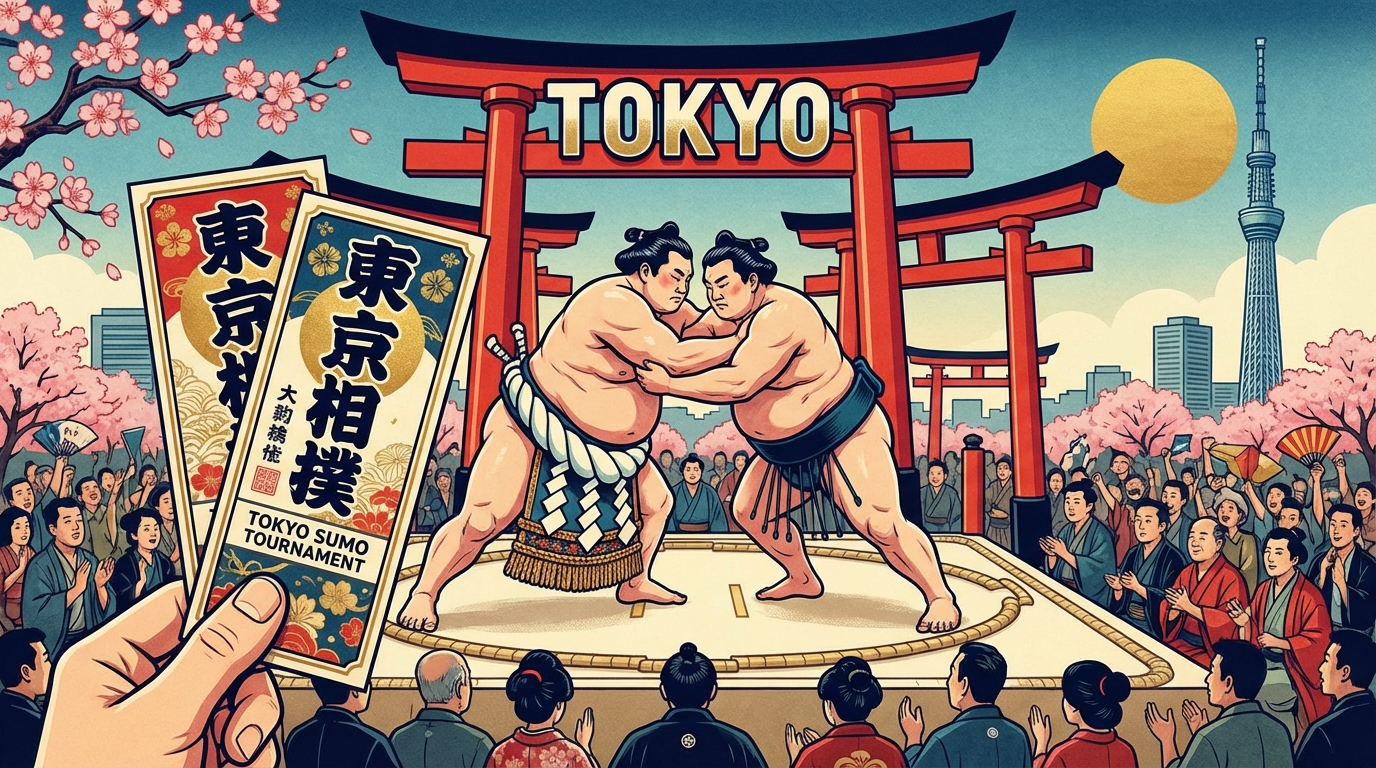
Before you even think about buying a ticket, you need to know when Sumo actually happens. This isn’t a weekly occurrence like the Premier League. There are six Grand Tournaments (Honbasho) a year in Japan, but only three happen in Tokyo.
- January (Hatsu Basho): Usually mid-to-late January. It’s cold outside, but the arena is heated.
- May (Natsu Basho): Mid-to-late May. The weather is perfect, and tickets are incredibly competitive.
- September (Aki Basho): Mid-to-late September.
The other three tournaments are in Osaka (March), Nagoya (July), and Fukuoka (November). If you are in Tokyo in July hoping to see Sumo, you are out of luck—the wrestlers are sweating it out in Nagoya.
Understanding Sumo Ticket Prices in Tokyo: From Budget Chair Seats to Premium Boxes
Let’s just rip the bandage off: Sumo isn’t cheap. Unless you’re willing to sit in the nosebleeds, you’re going to pay a premium for the privilege of watching 150kg men slam into each other.
The price gap is massive. At the bottom end, you have the Chair Seats (Arena seats) on the second floor. These range from roughly 3,500 JPY to 9,500 JPY ($23 – $65 USD). You get a designated seat, a decent view, and you don’t have to mortgage your house.
Then you hit the Masu-seki (Box Seats) on the first floor. This is where things get pricey. You generally can’t buy just one seat; you have to buy the whole box of four.
- Box Seat B: Around 40,000 – 42,000 JPY ($270 USD) per box.
- Box Seat C: Slightly cheaper, maybe 34,000 – 38,000 JPY ($240 USD).
- Box Seat A: If you can find them, they’re even more, but they usually vanish instantly.
And then, the holy grail: Tamari (Ringside). 20,000 JPY ($135) per person. Sounds reasonable? It would be, if you could actually get them. These are mostly controlled by tea houses and sponsors. If you manage to snag one, buy a lottery ticket immediately after.
Breakdown of Seating Categories: Ringside, Masu-seki (Box), and General Admission
Ryogoku Kokugikan is a weird arena. The seating hierarchy is physical, cultural, and honestly, a bit of a torture test for the uninitiated.
Tamari (Ringside)
These are the “sand-swept” seats. You are literally right there. No barrier. If a wrestler goes flying, you are the cushion. It’s thrilling, terrifying, and uncomfortable. You sit on a single cushion on the floor. No back support. If you have bad knees or a slow reaction time, do not sit here. You might get crushed.
Masu-seki (Box Seats)
This is the “traditional” way to watch. It sounds romantic. A private box!
Here’s the reality: It is a 1.3-meter square of tatami.
Fit four full-grown Western adults in there? Good luck. You will be knee-to-knee, unable to stretch your legs, for four to six hours. It’s intimate, let’s say. Most foreigners buy a 4-person box for just two people so they can actually breathe.
Chair Seats (2nd Floor)
Honestly? The best option for casual fans. You get a chair. With a backrest. You can keep your shoes on. The view is steep, so you see everything clearly. Sure, you’re far away from the sweat and the heavy breathing, but you can walk the next day.
AI Planning your trip? Ask AI Tokyo Concierge
Get personalized help based on this guide, your travel dates, budget, and plans.
How to Buy Sumo Tickets as a Foreigner: Official Websites vs. Third-Party Services
This is where the headache starts. The system is not designed for you.
The Official Way (Ticket Oosumo / Pia)
The Japan Sumo Association has an English site (sumo.pia.jp/en).
- The Pro: You pay face value.
- The Con: It is a bloodbath. Tickets go on sale one month before the tournament at 10:00 AM JST. The site crashes. By the time it loads, everything good is gone. It requires Japanese credit cards sometimes, or a convoluted 7-Eleven pickup that confuses everyone.
The “I Want to keep my Sanity” Way (Third-Party)
Services like BuySumoTickets.com are the gold standard for foreigners. You pay a markup (maybe $10-$20 per ticket), but you place your order weeks in advance. They queue up for you. They buy the tickets. They mail them to your hotel.
Is it more expensive? Yes.
Is it worth it to avoid refreshing a crashing website at 3 AM? Absolutely.
Tours (Viator / Klook)
You can buy a “Sumo Tour.” These are expensive. You’re paying for a guide to tell you what a Rikishi is. If you just want a ticket, this is a bad value. If you want someone to hold your hand, go for it.
A Day at the Kokugikan: The Timeline
One of the biggest mistakes tourists make is assuming the event starts at a specific time and ends 90 minutes later. Sumo is an all-day affair, but the energy shifts dramatically throughout the day.
- 8:30 AM – The Ghost Town: The doors open. The lowest-ranked wrestlers (Jonokuchi) start fighting. These are skinny teenagers getting pushed around in an empty, silent arena. Only go this early if you are a die-hard purist or want to nap in your seat.
- 2:00 PM – The Warm Up: The Juryo (second division) matches begin. The crowd starts to trickle in. The lights get brighter. The wrestlers actually look like professional athletes now.
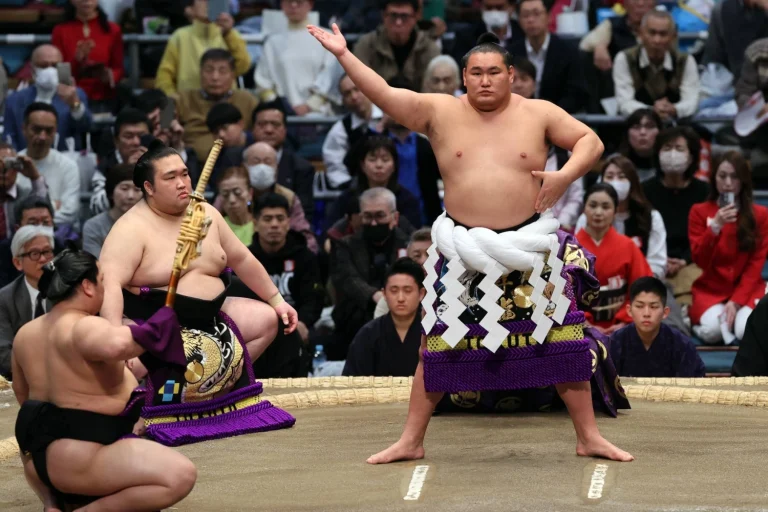
- 3:45 PM – The Makuuchi Ring Entry (Dohyo-iri): Do not miss this. The top division wrestlers enter the ring wearing their Kesho-mawashi (silk ceremonial aprons worth thousands of dollars). It is a colorful, solemn parade.
- 4:00 PM – The Main Event: The top division bouts start. The arena is full. The crowd is buzzed. This is peak Sumo.
- 6:00 PM – The Bow Twirling Ceremony: As soon as the final match ends, half the tourists rush for the exits. Stay seated. A lower-ranked wrestler performs the Yumitori-shiki, a rhythmic bow-twirling dance to dismiss the spirits. It takes two minutes and is beautiful.
Securing Same-Day Tickets at Ryogoku Kokugikan: What Time to Line Up
Stop.
Do not do this.
Years ago, you could show up at 6:00 AM, wait in line, and grab a cheap “General Admission” ticket for 2,200 JPY.
That system is effectively dead.
Most sources now confirm that “same-day” tickets are just leftovers. If the tournament is sold out (and it almost always is in Tokyo), there are zero tickets at the door.
I’ve seen tourists show up at 7 AM, wait for two hours, and get turned away. Don’t waste your vacation morning. Buy in advance or accept that you’re watching it on TV in an Izakaya.
Decoding the Rituals: Salt, Water, and Stomping
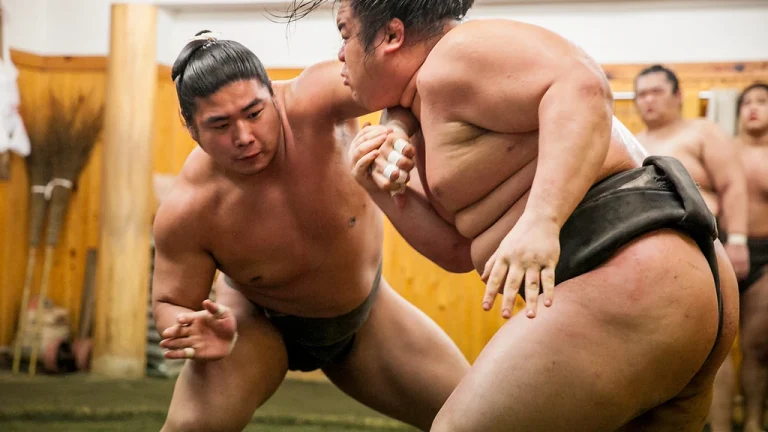
Sumo is 50% wrestling and 50% Shinto ritual. If you know what you’re looking at, it’s fascinating. If you don’t, it looks like a lot of stalling.
- The Salt Throw (Shiomaki): Before a bout, wrestlers grab a handful of salt and toss it into the ring. This isn’t for traction; it’s purification. Salt cleanses the ring of evil spirits. Some wrestlers toss a polite pinch; others (like the crowd favorite Terutsuyoshi used to) throw a massive cloud of salt that covers the first three rows.
- The Power Water (Chikara-mizu): You’ll see the wrestler accept a ladle of water from the previous winner. They rinse their mouth and spit it out (into a bucket, thankfully). They are symbolically cleansing their body and spirit before the fight. They do not swallow the water.
- The Leg Stomp (Shiko): When they lift that massive leg high in the air and slam it down? That’s to wake up the earth and scare away demons living in the ground. It’s also a killer hamstring stretch.
Spectator Etiquette: Is it Okay to Talk and Cheer During Matches?
Sumo isn’t golf. You don’t have to be whisper-quiet the whole time. In fact, it’s rowdy.
People drink beer, eat yakitori, and shout at the top of their lungs.
Shout their names.
When the wrestler you like steps up, scream his name. “TERUNOFUJI!”
You’ll hear a chorus of old Japanese men doing the same. It’s part of the vibe.
“Ganbare!” (Do your best!) is the standard cheer.
But—read the room. If the Gyoji (referee) is shouting specifically for the wrestlers to get ready, maybe pipe down.
The Silent Rule: Respecting the Tachiai and Crucial Moments
There is one sacred moment: The Tachiai.
This is the initial charge. The wrestlers squat, touch their fists to the earth, and stare each other down. The crowd noise will naturally dip.
Do not be the guy screaming “WOOOO!” during this silence.
You can feel the tension. It’s heavy. The clash of bodies sounds like two car doors slamming together. You want to hear that sound.
After they collide? Go nuts. Scream all you want.
Also, throwing your cushion (zabuton) after a Yokozuna loses? It used to be tradition. Now it’s banned.
People still do it sometimes.
Don’t do it. You’ll get kicked out, and hitting an 80-year-old lady in the head with a cushion isn’t a great look.
What to Wear to a Sumo Match: Is There a Strict Dress Code?
No.
You will see older Japanese men in full Kimono. You will see tourists in cargo shorts and Metallica t-shirts.
Nobody cares.
There is no formal dress code. However, the closer you are to the ring, the nicer people tend to dress. If you are in a Ringside seat, maybe wear pants? You’re going to be on TV.
But generally, casual is fine. The arena is air-conditioned but can get stuffy with 10,000 people. Dress in layers.
Shoes-Off Policy: Footwear Tips for Box Seats and Ringside Areas
This catches people off guard.
- Chair Seats (2nd Floor): Keep your shoes on. Easy.
- Box Seats (1st Floor): Shoes OFF. You put them in a little rack behind you or in a bag.
- Ringside: Shoes OFF.
Wear nice socks.
I cannot stress this enough. You will be sitting cross-legged or kneeling. Your feet will be visible. Do not wear the socks with the hole in the big toe.
Also, since you’re taking your shoes on and off if you go to the bathroom or buy food, wear slip-ons. Lacing up boots every time you want a beer is a nightmare.
Food and Drink Rules: Eating Bento and Drinking Sake at the Arena
This is the best part of Sumo. It’s a picnic.
Unlike Western sports where you get a sad hotdog, Sumo food is legit.
The Rules:
- Box/Chair Seats: Eat whatever you want. Drink sake, beer, tea. You can buy amazing Bento boxes at the station or inside the arena.
- Ringside (Tamari): STRICTLY NO EATING OR DRINKING.
I’m serious. If you crack open a beer in the ringside seat, a security guard will teleport to your location and stop you. You are there to suffer and respect the sport, not to snack.
What to Eat:
Get the Kokugikan Yakitori inside the arena. It is surprisingly famous. Why? Because the factory is literally in the basement of the arena.
There is also a superstition: Chickens stand on two legs. In Sumo, touching the ground with your hand means you lose. Therefore, eating a two-legged animal brings good luck.
Note: The yakitori is served cold. Don’t send it back. It’s designed to be eaten that way, and it’s surprisingly tender.
Also, try Chanko Nabe in the basement hall. It’s the wrestler stew—a massive protein bomb of veggies, meat, and broth. It is cheap (500 JPY), hearty, and you eat it quickly in a cafeteria setting.
Bring cash. The beer vendors walking around don’t take Apple Pay.
Souvenirs: What to Buy to Prove You Were There
Ryogoku Kokugikan has decent merchandise shops, but they get absolutely mobbed during the intermission between the Makuuchi ring entry and the bouts. Go early (around 2 PM).
- The Banzuke: This is the official ranking sheet for the tournament. It’s a piece of paper with the wrestlers’ names written in an ancient, stylized calligraphy called Sumo-ji. It costs practically nothing (around 55 JPY) and is the most authentic souvenir you can own.
- Tegata: These are autograph boards with a wrestler’s handprint (usually in red or black ink) and their signature. You can get printed replicas for cheap, or authentic hand-stamped ones for a higher price.
- Sumo Chocolate: It sounds cheesy, but the chocolate shaped like little wrestlers is a crowd-pleaser for gifts back home.
Around the Neighborhood: Exploring Ryogoku
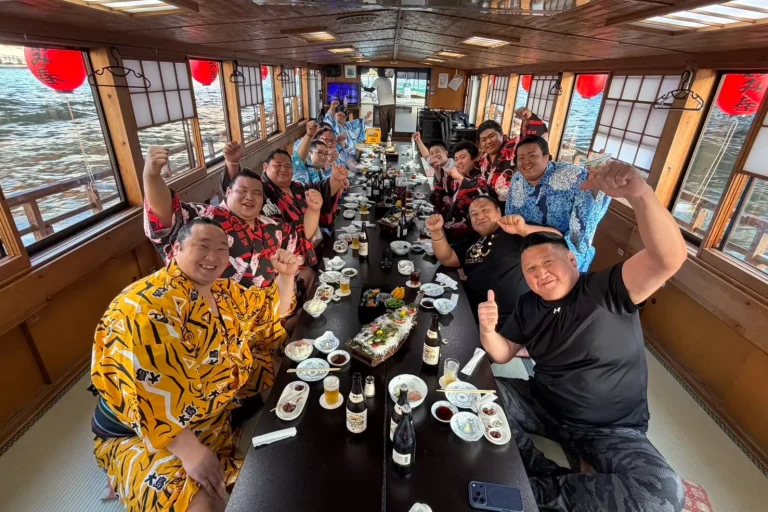
Ryogoku isn’t just the arena; it’s “Sumo Town.” If you arrive a bit early, walk around the JR Ryogoku station. You will likely see lower-ranked wrestlers walking around in their Yukata (cotton robes). They are generally friendly, but don’t bother them if they look like they are in a rush.
Check out the Sumo Museum inside the arena (it’s free with your ticket). It’s small, but it houses rotating exhibits of ancient aprons and woodblock prints that show just how little this sport has changed in 300 years.